Category: News

  • Antigua and Barbuda: COP27: Antigua’s PM asks ‘Why should we live somewhere else?’ as he says his people don’t want to become climate refugees

    Antigua and Barbuda: COP27: Antigua’s PM asks ‘Why should we live somewhere else?’ as he says his people don’t want to become climate refugees

    Source: news.sky.com

    Published: 14 November 2022

    Prime Minister Gaston Brown, of Antigua and Barbuda, has angrily rejected the idea his people should be forced to migrate, and warned that climate diplomacy is failing to act with anything like the urgency needed.

    The leader of Antigua and Barbuda has said he will not allow his people to become climate refugees, in an indignant rebuff to the idea some citizens might have to relocate as climate breakdown bites.

    “Why should we, [live somewhere else]?” Gaston Browne told Sky News during the COP27 climate summit in Egypt.

    The Caribbean leader added: “That is our civilisation. That is where we have lived for hundreds of years.”

    Last week, the climate envoy of the Marshall Islands, a sprawling chain of volcanic islands and coral atolls in the central Pacific Ocean, averaging just 1.8 metres above sea level, told Sky News they were already considering relocation.

    Commonwealth nation Antigua and Barbuda is also low-lying, but its prime minister said drought was hitting hard.

    The country must now generate all its drinking water via energy-intensive reverse osmosis, making agriculture unviable and forcing it to import 90% of its food.

    “We will certainly not consider any option of relocation. We do not expect to become climate refugees in anyone’s country,” he said.

    The prime minister vowed to fight “unrelentingly for global emissions to be reduced”, to preserve the country’s environment and “civilisation”.

    In an interview during his visit to Sharm el-Sheikh, Mr Browne also warned that multilateral climate action is failing to protect the planet with anything like the urgency needed.

    Advertisement

    The annual United Nations COP climate talks have made “incremental gains”, he said.

    “But the urgency that is needed to protect the planet – climate diplomacy has failed in that regard. And that is why other options must be pursued,” he added.

    He and other small island states like Tuvalu and Palau are seeking redress from the international courts to establish a legal means of holding polluters accountable.

    Rich nations like the USA and UK have contributed far more to climate change than islands like Antigua, which cruelly are being disproportionately damaged. “The polluter must pay,” he said.

    “I don’t know that we can sit back and rely on the voluntary acts”, because so far there has been only “creeping progress”, he said.

    He and the other small islands in his negotiating bloc are demanding the negotiations result in a new fund to pay compensation for those climate impacts that are beyond the realms of human adaptation – for example hurricanes supercharged by climate change that leave homes and the tourism industry in tatters.

    COP27 started with a breakthrough as the issue of “finance” made it onto the agenda for the first time. Rich countries historically resisted the idea but are slowly coming round to it after extreme climate impacts at home and in vulnerable countries, such as severe flooding in Pakistan.

    Today, as the second week of COP27 got underway, two options emerged in a draft document. While vulnerable nations want a dedicated fund, developed countries say there are already many funding options and institutions available that can be tweaked and improved.

    They argue this could be more efficient than agreeing another dedicated fund, but the idea simply does not wash with many vulnerable countries who say they are fed up of relying on voluntary and vague measures.

  • Antigua & Barbuda: Nation pays final respects to Ambassador Josette Michael

    Antigua & Barbuda: Nation pays final respects to Ambassador Josette Michael

    Source: antiguaobserver.com

    Published: 10 November 2022

    The official funeral service and mass for 81-year-old Ambassador Josette Christine Michael took place at the Holy Family Cathedral yesterday. The mother of St Peter MP Asot Michael, who died on October 30, had served as an ambassador for the country’s Citizenship by Investment Programme, among other things.

    Tributes were given by the Antigua and Barbuda Labour Party Choir, the ambassador’s niece Marissa Michael, friend and personal attorney Dr Errol Cort, and Grammy Award-winning artiste Gramps Morgan who performed his hit song ‘People Like You’, while Asot Michael, her only son, delivered the eulogy.

    Ambassador Michael was remembered as a loving matriarch who dedicated her life to Jesus Christ and helped the poor throughout her years.

    Attendees said she would be dearly missed by her many relatives and friends in Antigua and Barbuda, Guadeloupe and the wider region.

  • Geneva:  Statement by the Investment Migration Council concerning the European Commission’s case against Malta

    Geneva: Statement by the Investment Migration Council concerning the European Commission’s case against Malta

    Published: 9th November 2022

    On the 29th September 2022 the European Commission, in an expected move, brought Malta before the Court of Justice of the European Union (JCEU) citing alleged violations of the principle of sincere cooperation (Article 4(3) TEU) and the principles underlying EU citizenship (Article 20 TFEU) in the context of offering Maltese citizenship for investment.

    The Commission opined, most importantly, that these violations resulted from the fact that these newly-naturalized Maltese citizens – who obtained this nationality and by extension the citizenship of the European Union, which is granted by derivation to all the ‘nationals of the Member States’ (Article 9 TEU), as a result of investing a ‘pre-determined amount’ – acquired this citizenship without a ‘genuine link’ to the respective Member State. The case thus builds on an earlier reasoned opinion and two letters of formal notice from the Commission, numerous public pronouncements by Commissioners, as well as European Parliament Resolutions and Reports. These two institutions have thus created an atmosphere of condemnation, in the face of silence from the European Council and astonishment of leading European scholars (among many others, see also here).

    Basic legal analysis of this action demonstrates beyond any reasonable doubt that the case in question is a clear example of abuse of power by the European Commission, acting in the absence of competence; based on flawed legal reasoning; and potentially capable of undermining the core principles of the internal market – the heart of the Union acquis which the Commission is supposed to safeguard. In essence, the Commission claims that it should have a say in the legal framing of the peoples of the Member States, thus directly contradicting the principle of conferral. EU law is clear that the competences not conferred on the Union remain with the Member States (Article 4(1) TEU). Once the Commission acquires a right to decide what it means to be a Maltese – a competence not conferred on the Union – the Pandora’s box is open, as the same trick can be used to inform France about who is French and who is not, and Ireland on who is Irish, in accordance to the Commission and without regard to the lawful operation of Maltese, French and Irish legislation. The very starting point of approaching the matter through the prism of ‘genuine links’ – an approach expressly outlawed by the Court of Justice in Micheletti – points towards the crumbling checks and balances in the Commission as an Institution: the law means little, as the case makes clear, in the face of abusive political pressure, as it is also shown in the Report commissioned by the Investment Migration Council on the matter.

    Competence

    No competence to legislate on matters of the conferral of the nationalities of the Member States has been conferred on the Union, as Union citizenship, although ‘autonomous’ as per AG Poiares Maduro in Rottmann, remains derivative from the nationalities of the Member States by law (Articles 9 TEU and 20 TFEU). Article 9 TEU, moreover, following the Danish declaration on this matter appended to the Treaty of Maastricht, clarifies that ‘Citizenship of the Union shall be additional to and not replace national citizenship’. In this context the inability of the Union to rule on the matter of Member State nationalities is abundantly clear: ‘Under the principle of conferral, the Union shall act only within the limits of the competences conferred upon it by the Member States in the Treaties to attain the objectives set out therein. Competences not conferred upon the Union in the Treaties remain with the Member States’ (Article 5(2) TEU, see also Article 4(1) TEU). The Court of Justice has been clear about the Member States’ freedom to shape their own nationality law (Rottmann, Tjebbes, JY), which includes the conferral (JY) and withdrawal (Tjebbes, Rottmann) of nationalities. Crucially, in the absence of Union legislative competence, the Member States are required to frame and implement national law on nationality with ‘due regard’ to EU law (Micheletti).

    In practice this means that the exercise of national competence cannot undermine the achievement of the objectives of integration (Article 2 TEU) and/or undermine the values of the Union, as expressed in Article 2 TEU. The protection of fundamental rights and fundamental freedoms, including the freedom of movement, is thus to be taken into account in the context of Member States’ actions in the nationality field (Rottmann), which in practice means that the Member States are required to apply proportionality assessment in cases where the continued enjoyment of EU citizenship and the rights connected with it is in danger (Rottmann, Tjebbes, Ruis Zambrano), and they have to ensure that EU citizenship is not lost, however briefly, in the context of switches between Member States’ nationalities (JY). The Member States are prohibited from questioning each-others’ nationalities (Micheletti).

    The Court has been clear that while the competence in nationality matters remains with the Member States, the Union is still able to intervene to protect the continued possession of EU citizenship by individuals as well as their enjoyment of EU citizenship rights (Tjebbes, Rottmann, JY). Those who have never been EU citizens do not enjoy such protection (Kaur). The Commission’s intervention, seeking to push a Member State to curtail the rights of own citizens rather than seeking to safeguard such rights to the fullest extent is thus a violation of EU law as it stands: its very starting logic is repugnant to the rationale of the Treaties.

    ‘Genuine Links’

    An essential aspect of EU citizenship law consists of the full trust enjoyed by the Member States in citizenship matters vis-à-vis their peers as well as Union institutions, as long as the rights of individuals under EU law, including their procedural rights, remain safeguarded. The Member States cannot question each-others’ nationalities in seeking to deprive EU citizens of the enjoyment of their rights (Micheletti, also Zhu and Chen). EU law thus imposes an obligation to give full recognition to EU citizenship acquired via the nationalities of any Member State themselves acquired according to their legal requirements, be it by birth outside the territory (Zhu and Chen) or establishing remote ancestry ties without any linguistic knowledge or residence history in the state of nationality (Micheletti). Discrimination between EU citizens based on their mode of citizenship acquisition is strictly prohibited (Boukhalfa). Consequently, the ‘genuine links’ that the Commission is building its case upon are the genuine legal links of nationality existing between a Member State and an individual, which do not imply any requirements of additional connections between the said individual and the Member State in question, beyond the fact of existence of the legal link of nationality. Requiring any kind of history of residence or ‘culture’ ties on top of the citizenship link is a direct violation of the principle of non-discrimination on the grounds of nationality (Article 19 TFEU) and the principle of non-discrimination on the basis of a particular ground of citizenship acquisition (Boukhalfa). The Court of Justice in Micheletti expressly prohibited any reference to cultural/residential links between an EU citizen and his Member State, prompting Advocate General Tesauro to mock the arguments invoking connections with another Member State going beyond nationality brought by the Spanish government in that case. The Commission’s reference to ‘genuine links’ is a direct violation of EU law as it stands.    

    Sincere cooperation

    The principle of sincere cooperation in Article 4(3) TEU covers both the sins of omission and the sins of commission and prohibits Member States from deploying national law adopted within their own sphere of regulatory competence in a way that could threaten the internal market and the achievement of the objectives of the Union. The Union offers its citizens an area of freedom, security and justice; ensures non-discrimination on the basis of nationality; provides free movement in the territory of all the Member States; and other rights found in Part II TFEU. To state that a newly-naturalised Maltese citizen is enabled to enjoy these rights in order to argue that the principle of sincere cooperation has been infringed – which the Commission is doing – is a logical impossibility: rather than an infringement, what we observe is that the law functions as designed. Malta creates Maltese citizens, who are then recognised as EU citizens and granted EU-level rights by default. Since the availability of rights to EU citizens, as well as Malta’s ability to create them unquestionably flows from the law, as explained above, the breach that the Commission complains about is nowhere to be seen.

    Moreover, given that the Court prohibited any kind of ‘genuine links’ approach in Micheletti, the argument alleging a breach of sincere cooperation is not merely flawed: it is put forward in an outright disregard of the law.

    The Treaties do not recognise the nationalist logic which the Commission presumes, as the Court has clarified on many occasions.

    Those who acquired a ius soli citizenship having never visited their Member State of nationality and thus enjoy zero ‘genuine links’ with it (Zhu and Chen) are granted equal rights to those who have never visited the Member State which issued their passport, having received nationality via ancestry in Latin America (Micheletti): these rights include benefitting from the full protection of EU law, including the express prohibition of any Member State from invoking a ‘genuine links’ argument to prevent these rights from operating. The Commission is mounting an attack on the heart of the fundamental rights provided by EU law.

    The logic of the law explained above is not a frivolity. Allowing a check for ‘genuine links’ would turn the whole idea of non-discrimination on the basis of nationality into a fiction in a split second, it is precisely the reason why the Court in Micheletti prohibited Member States from going down this path. By suggesting the contrary, the Commission is mounting an attack  on the heart of the fundamental rights provided by EU law, as well as the essence of the free movement of persons in the internal market. Given that the principle of sincere cooperation applies equally to the Member States and to the EU institutions, bringing Malta before the Court of Justice based on a gross perversion of the law is itself a clear violation of the duty of sincere cooperation by the Commission.

    Dangerous abuse of power

    The underlying thinking informing this obscurantist unlawful pressure put on Malta is instructive in itself, as the Commission is attempting to set aside the law in order to attack only one mode of Member State nationality acquisition among many: while according to the Commission, paying for citizenship is not ok, ‘ancestral links’ emerge as always genuine according to this reasoning, no matter how remote the ‘ancestor’. In other words, the Commission uses the case of Malta to promote a citizenship ideal rooted in blood: fetishising both sexism (grandmothers usually count for little under this reading) and racism (only those with no ancestral connections have to ‘buy’ citizenship).

    In summary, the Commission’s push to frame EU citizenship is in direct opposition with the founding values of the Union, including non-discrimination on the basis of nationality, democracy and the respect of the constitutional identity of the Member States.

    This is something that the Court will not be able to uphold from whichever angle it may look at it.

    To read or download the official statement, please click here

  • Vanuatu: The Council fully suspends visa free travel agreement

    Vanuatu: The Council fully suspends visa free travel agreement

    Published: 9 November 2022

    The Council today decided to fully suspend the visa waiver agreement with Vanuatu due to the risks posed by its investor citizenship schemes (‘golden passport’ schemes).

    A partial suspension of the agreement had already been adopted on 3 March 2022. Following the partial suspension, the Commission started a dialogue with Vanuatu on 12 May to address the EU’s concerns. However, since then the country has failed to engage in any meaningful way and the circumstances that led to the temporary suspension still persist.

    Based on careful monitoring and assessment of Vanuatu’s investor citizenship schemes, the EU has concluded that they present serious deficiencies which could pose a risk to the EU, notably due to:

    • the extremely low rejection rate, which raises doubts as to the reliability of the security and due diligence screening
    • the absence of physical presence or residence requirements, short processing periods and a lack of information exchange with applicants’ countries of origin or residence
    • the granting of citizenship to applicants listed in Interpol databases
    • the nationalities of origin of successful applicants, which include several countries whose nationals require a visa to enter the EU

    Next Steps

    The decision will now be published in the Official Journal and will apply as from 4 February 2023.

    Background

    A visa waiver agreement has applied between the EU and Vanuatu since 2015. This agreement allows citizens of Vanuatu to travel to the EU without a visa for stays of up to 90 days in any 180-day period. In recent years, Vanuatu has established additional investor citizenship schemes and the number of successful applicants has increased. In 2017, the Commission started investigating those schemes, since they raised serious doubts on account of their security failures. The Commission also warned the Vanuatu authorities about the suspension clauses contained in the visa waiver agreement. Despite the commitment by Vanuatu authorities to implement reforms in order to address concerns, in April 2021 the government of Vanuatu took further steps to set up a new citizenship programme.

    In this context, the Commission considered that the investor schemes in place in Vanuatu countered the objectives of the EU visa policy, and on 12 January 2022 proposed the partial suspension of the visa waiver agreement with Vanuatu.

    The agreement was partially suspended for a period of nine months, from 4 May 2022 to 3 February 2023, to allow for an enhanced dialogue with Vanuatu to remedy the situation. Due to the lack of progress, on 12 October 2022 the European Commission proposed the full suspension of the agreement from 4 February 2023.

    To read the official press release, please click here

  • Grenada: Record-breaking revenue from CBI programme

    Grenada: Record-breaking revenue from CBI programme

    Source: caribbean.loopnews.com

    Published: 7 November 2022

    Grenada recorded income in excess of EC$100 million (One EC dollar=US$0.37 cents) during the first nine months of this year from the controversial Citizenship by Investment Programme (CBI), Prime Minister Dickon Mitchell has said. 

    Addressing the 2022 Investment Migration Round Table Conference, Mitchell, who came to office in June this year, said that in absolute dollar figures, the inflows have been EC$112 million compared to EC$80 million in 2021. 

    “The National Transformation Fund moved from EC$47.2 million for the period January to September 2021 to EC$49.5 million for the same period in 2022. If we curate our 2022 capital budget this is about 20 per cent of that budget which clearly is not insignificant by any measure,” he told the conference. 

    “Additionally, the approved applications for private sector projects will potentially general EC$207 million in investment project funds for the period January to September 2022 compared to EC$161 million for the same period in 2021,” he told the conference that included delegates from local and international marketing agents. 

    In addition, Grenada approved citizenship for 1,058 people under the CBI during the first nine months of this year, while eight people were rejected. 

    Under the CBI programme, which began here in August 2014, Grenada provides citizenship to foreign investors who in return make a significant contribution to the socio-economic development of the island. 

    Grenada is among a handful of Caribbean Community (CARICOM) countries with a CBI programme and to date, more than 7,000 people have received citizenship through the initiative which was become the major non-tax revenue earner for the country. 

    Most applications to Grenada come from China, Russia, India, South Africa, and Nigeria. There are also several applications from the United States and Europe. 

    The conference is a collaborative initiative undertaken by the Grenada Co-operative Bank Limited and Grenada Citizenship by Investment Unit.

  • Brazil: F1’s Lewis Hamilton Receives Honorary Brazilian Citizenship

    Brazil: F1’s Lewis Hamilton Receives Honorary Brazilian Citizenship

    Source: bloomberg.com

    Published: 7 November 2022

    British Formula 1 racing driver Lewis Hamilton became an honorary citizen of Brazil on Monday for winning the Sao Paulo Grand Prix in 2021.

    On that occasion he wore a helmet honoring Brazilian Ayrton Senna and, at the end of the race, he repeated his colleague’s gesture of making a lap of consecration with the Brazilian flag. 

    “It’s honestly the greatest honor for me to be here receiving and accepting the citizenship. I really do feel like I’m one of you finally, so thank you,” Hamilton said in his speech to a floor packed with fans and lawmakers.

    The seven-time world champion dedicated the honor to Brazilian driver Ayrton Senna, who died in 1994, as well as to his relatives, friends and fans. The homage was proposed at the end of last year by congressman Andre Figueiredo and was passed by the lower house in June of this year.

    “Having Lewis Hamilton among Brazilian citizens fills this house and the country with pride,” said Lower House Speaker Arthur Lira.

    Hamilton, who was knighted by his own country, also said in his speech that as a Black man in the sport there’s still a lot of progress to be made.

    “But I’m so committed to push for change, push for diversity,” he said. “I’m so inspired when I come to Brazil because I see so many people fighting for the same thing.”

  • Cyprus: Trial of four alleged key players in ‘golden passport’ scheme postponed

    Cyprus: Trial of four alleged key players in ‘golden passport’ scheme postponed

    Source: cyprus-mail.com

    Published: 26 October 2022

    The trial of the four key players allegedly involved in the now scrapped ‘golden passport’ scheme scandal, including two who were shown in Al Jazeera’s undercover report, has been postponed to November 30.

    The Nicosia criminal court decided to postpone the first hearing that was expected to start on Wednesday following requests by the defence counsel for additional testimonial material.

    Chris Traintafyllides, the lawyer of one of the defendants, former House president Demetris Syllouris. requested testimonial material which is missing from the files handed over by the prosecution, noting that without it, he cannot advise his client. He also raised issues of abuse of process as he has not yet received an answer regarding the possible implication of the attorney general and the assistant attorney general in the naturalisation of foreign investors.

    Requests for the delivery of testimonial material were also submitted by lawyer Giorgos Papioannou who is representing former Akel MP and developer Christakis Giovanis and senior lawyer for the Giovanis Group Antonis Antoniou as well as lawyer Andreas Pittadjis who is representing himself.

    For its part, the Prosecution confirmed the objections of the defence lawyers regarding missing witness material and announced that it is examining lists sent by the lawyers to locate the witness material and deliver it.

    The court decided to proceed with a trial based on the findings of the Nicolatos investigation into the citizenship by investment scheme, prompted by the airing of a report by the Al Jazeera network.

    However, the legal service decided not to use the disputed video after the Al Jazeera journalists refused to testify at the trial, daily Politis reported on Tuesday. In its article, the newspaper explained that another reason why the video was not included in the testimonial material is due to the fact it was taken illegally and is a product of entrapment, thus highly likely to not be accepted by the court.

    The defendants face five charges, including conspiracy to defraud the Republic and influencing a public official in violation of the laws criminalising corruption.

    The court set bail for Syllouris, Giovanis and Antoniou at €50,000 and €30,000 for Pittadjis.

    Triantafyllides had previously argued that Savvides and Angelides were involved in charges one, two and three in their capacity as former ministers, noting that both served as ministers in the cabinet which approved passports – the same passports for which his client is on trial. They served as justice minister and defence minister respectively, as recently as 2020.

    In August 2020, Al Jazeera aired a report – dubbed The Cyprus Papers – on the island’s citizenship-by-investment programme based on an investigation of “more than 1,400 leaked documents.”

    The network said Cyprus had been granting citizenships to dubious individuals, a claim fiercely rejected at the time by the government.

    Al Jazeera’s undercover video showed Syllouris and Giovanis offering to help a pretend Chinese businessman with a criminal record secure citizenship.

    The pair were forced to resign as the government hastily terminated the programme.

    Triantafyllides also raised another matter in the Nicosia district court before the referral of the case to the criminal court. His argument related to charges 4 and 5. The charge sheet says these have to do with the granting of a passport (the third) to a foreign national – but does not name the individual.

    “The global population is approximately 7.5 billion, and I cannot adequately defend my client unless I know who this foreign national is,” he told the court.

    “The question is, does this person exist or not?”

    A third matter he raised pertains to an opinion piece published by Politis newspaper on September 10, which the attorney claimed had sought to prejudice the court.

    The unsigned opinion piece read: “Let us hope that this time that justice will keep both its eyes and ears open, and that we shall not end up again with a decision akin to those in other major scandals.”

    The Nicolatos investigative committee was appointed by the government and was led by former Supreme Court judge Myron Nicolatos. It found that 53 per cent of the 6,779 citizenships granted overall were unlawful, and said politicians and institutions had political responsibilities while certain applicants and service providers may be held criminally culpable.

    The probe covered the period from the scheme’s inception in 2007, through to August 2020.

  • St. Kitts: Heads of the OECS set to tackle critical issues pertinent to the region

    St. Kitts: Heads of the OECS set to tackle critical issues pertinent to the region

    Source: sknvibes.com

    Published: 20 October 2022

    Prime Minister of St. Kitts and Nevis, the Honourable Dr. Terrance Drew and other Heads of the Organization of Eastern Caribbean States (OECS) will tackle myriad issues over the next two days (October 19-20) as they participate in the 72nd Meeting of the OECS Authority being held in Montserrat.

    Prime Minister Dr. Drew, who made his inaugural address to the august body on October 19, said that a number of critical issues to be discussed include the Portability of Social Security Benefits; Contingent Rights Policy Implementation; Capacity Building for officials, and the finalization of an OECS Unique Identification Card.

    “An important part of the discussion should also include a strategy for enhancing the viability and sustainability of our Citizenship by Investment Programmes. Many of our countries are dependent on the revenues generated by this programme but we must not be short-sighted or sell our countries short,” said Dr. Drew. “We must be cognizant of the risks associated with devaluing our programme and develop a united approach which will ensure the viability and continued success of the programme for all our Member States who are involved and all of our citizens who benefit and will continue to benefit.”

    In addition to the opportunities, there are several challenges that should not be overlooked. These challenges, Dr. Drew noted, must be addressed in earnest.

    “It is difficult for us to achieve our development objectives if we ignore the challenges posed by the proverbial elephant in the room – Glaring gaps in our intra-regional transportation sector. An efficient and sustainable transportation system will yield benefits for investment, trade and movement of people- two pillars of our regional integration movement,” said the honourable Prime Minister.

    Realizing that the region cannot have an efficient economic union without addressing these issues, Prime Minister Drew reaffirmed St. Kitts and Nevis’ commitment to strengthening the OECS Economic Union.

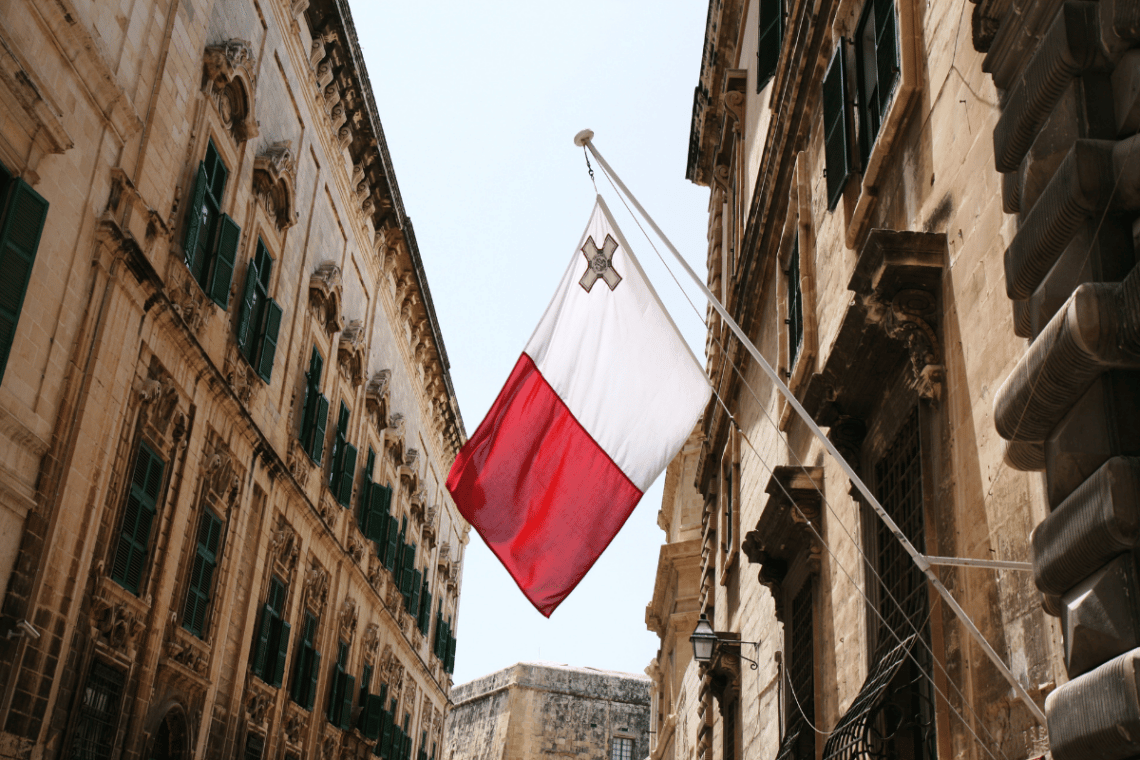
  • Malta: European Commission refers MALTA to the European Court of Justice against all legal advice.

    Malta: European Commission refers MALTA to the European Court of Justice against all legal advice.

    Source: ec.europa.eu

    Published: 29 September 2022

    The European Commission has decided to refer Malta to the Court of Justice of the European Union for its investor citizenship scheme, also referred to as the ‘golden passports’. The Commission considers that granting EU citizenship in return for pre-determined payments or investments without any genuine link to the Member State concerned is not compatible with the principle of sincere cooperation enshrined in Article 4(3) of the Treaty on European Union, and with the concept of Union citizenship, as provided for in Article 20 of the Treaty on the Functioning of the European Union.

    On 20 October 2020, the Commission sent a letter of formal notice to Malta, urging it to end its investor citizenship scheme. The Commission sent an additional letter of formal notice to Malta on 9 June 2021, following the introduction of a new scheme at the end of 2020.

    Following Russia’s war against Ukraine, Malta suspended this new scheme for Russian and Belarusian nationals. While this was a positive step, Malta continues to operate the scheme for all other nationalities and has not expressed any intention to end it.

    On 6 April 2022, the Commission sent a reasoned opinion to Malta. Malta’s reply did not satisfactorily address the concerns raised by the Commission. Malta is the only remaining Member State that operates such a scheme.

    Consequently, the Commission decided today to refer Malta to the Court of Justice of the EU under Article 258(2) of the Treaty on the Functioning of the European Union.

    Background

    EU citizenship and the rights it confers lie at the heart of the EU. Every person that holds the nationality of an EU Member State is at the same time an EU citizen. EU citizenship automatically gives the right to free movement, access to the EU internal market, and the right to vote and to be elected in European and local elections. For these reasons, the conditions for obtaining and losing nationality, regulated by the national law of each Member State, are subject to due respect for EU law.

    Investor citizenship schemes allow a person to acquire a new nationality based on pre-determined payments or investments, and in absence of a genuine link with the naturalising country, such as long-term residence. These schemes are different from investor residence schemes (or ‘golden visas’), which allow third-country nationals, subject to certain conditions, to obtain a residence permit to live in an EU country. Both types of schemes pose serious risks, in particular as regards security, money laundering, tax evasion and corruption.

    The Commission has been following up on the investor citizenship schemes in other Member States as well.

    In October 2020, the Commission also started an infringement procedure against Cyprus for its investor citizenship scheme. Cyprus suspended its scheme and stopped receiving new applications on 1 November 2020. However, as it continued to process pending applications, the Commission decided to send a reasoned opinion to Cyprus on 9 June 2021. Cyprus finished processing all pending applications in July 2021. The Commission is closely analysing the situation before deciding on any next steps.

    The Commission has also been in contact with Bulgaria on its investor citizenship scheme. Effective  5 April 2022, Bulgaria abolished the scheme.

    Since the launch of the first scheme in 2014 (the ‘individual investor programme’), Malta naturalised several thousand investors and their family members. At the end of 2020, Malta established a new scheme (the ‘Maltese Citizenship by Naturalisation for Exceptional Services by Direct Investment’ scheme), after the original one came close to reaching its limit of 1,800 successful main applicants. The new scheme maintains the principle that nationality can be awarded systematically, in return for pre-determined payments, without having to establish any genuine link between the applicant and Malta. On 2 March 2022, Malta announced that it had suspended, until further notice, the processing of applications from nationals of the Russian Federation and Belarus.

  • Europe: Citizenship for the rich: Demand rises for ‘golden passports

    Europe: Citizenship for the rich: Demand rises for ‘golden passports

    Source: france24.com

    Published: 1 October 2022

    The EU is set to take Malta to court over its scheme allowing wealthy foreigners to buy Maltese – and EU – citizenship for a costly fee. But buying citizenship and residence rights is a global trend among the super-wealthy that looks set to stay. 

    The European Commission on Thursday took Malta to the European Union‘s highest court over its “golden passport” scheme that allows wealthy investors to buy Maltese – and therefore EU – citizenship, without having to live in the country. 

    Despite repeated calls to end the scheme, Malta has raised €1.1 billion since 2013 through offering passports in exchange for investments, with most investors coming from the Gulf, Asia and Russia

    Under pressure from the EU, Cyprus and Bulgaria have recently stopped offering similar schemes. Yet the only concession Malta has made is to suspend the scheme for Russian and Belarusian citizens following the Russian invasion of Ukraine.  

    While Malta is under pressure to ban investment citizenship, multiple countries around the world welcome the practice.  

    “The [2008] global financial crisis also put pressure on governments to find ways to bring foreign investment into their economies, and this is seen as a relatively costless way of doing so,” says Lior Erez, departmental lecturer in theory of politics at Oxford University, UK. “Especially if it involves no actual migration.” 

    Yet the EU views things differently, citing “ethical, legal and economic” concerns as well as “several serious security risks”, if the scheme continues. 

    “By offering citizenship in exchange for pre-determined payments or investments, without a genuine link with the Member State concerned, Malta breaches EU law,” tweeted EU Justice Affairs Commissioner Didier Reynders on Thursday. “European Union values are not for sale.” 

    A security risk? 

    There are no precise figures for how many individuals around the world make citizenship investments ­– or buy passports – each year. Data is often amalgamated with those making migration investments ­­(hefty payments in exchange for residence visas). 

    Estimates put the combined annual figure in the tens of thousands, with the number of citizenship investors as the smaller part because the process is more expensive.

    “The numbers of people doing it are very marginal,” says Ayse Guveli, professor of sociology at the University of Essex, UK, “but they are extremely important because they are so rich. The aim [with golden passports] is to open up routes for them to invest in new countries.”

    In Cyprus, 1,400 approved applicants poured €2.15 million into the country between 2017 and 2019. 

    Of these, 30 had been granted to people under criminal investigation and 40 to people holding political or state positions which meant they were considered a serious risk for bribery or money laundering under EU guidelines, an Al Jazeera investigation found. 

    These cases pose a troubling security risk, as once citizenship is granted it is difficult to remove.

    Finding ‘a workaround to the system’

    Yet of the total successful applicants in Cyprus, five percent were thought to be potentially questionable.

    For the vast majority, reasons for applying for foreign citizenship are “pretty mundane” says Dr Kristin Surak, associate professor of political sociology at London School of Economics, UK. “The number one reason is travel.” 

    A wealthy businessman from the global south is likely to find it easier to attend meetings around the world if travelling with a widely accepted EU passport, for example.  

    The same is true for foreign nationals – often from the global south ­– living in countries where their passports restrict them from getting mortgages or opening bank accounts, Surak says. “And they’re doctors or professionals so they have the money to find a workaround to the system.” 

    Then, there are the super-wealthy who want to ensure emergency travel is possible. “You might get people in Hong Kong who are very worried about government crackdown,” Surak says. “Or very wealthy Americans who were used to going whatever they wanted around the world, then once Covid-19 hit they suddenly couldn’t travel.” 

    Demand for second passports among wealthy Americans increased by 300 percent between 2019 and 2021, Latitude, a company that guides individuals through the application process, reported.  

    In many countries, the pandemic had driven unprecedented global demand for investment citizenship and migration. An estimated 110,000 high-net worth individuals bought the right to live abroad in 2019. In 2023, this figure is expected to reach 125,000, and could grow larger. 

    In China, the country with the second highest number of billionaires in the world, Covid lockdowns are ongoing and quarantine restrictions before and after travel are still in place. 

    “But once those Covid restrictions lift people are expecting demand from China to go through the roof,” Surak says. “People living there do not want to be locked down again.” 

    ‘Relatively democratic’ 

    Currently the greatest demand for foreign citizenship and or residency among wealthy citizens comes from Russia. Some 15,000 Russians are expected to purchase the right to live abroad in 2022, plus spouses and family members who would be granted associated rights. 

    Following sanction measures, EU countries are not allowed to grant citizenship or residence rights to Russians. Yet there are many more options available outside of Europe. 

    Turkey is proving popular “for Russians, also rich Ukrainians and very many people from Arabic and Middle East Eastern countries like Saudi Arabia, Bahrain, Egypt, Syria and Iran”, says Guveli. 

    One reason for this is Turkey’s location. Guveli adds, “it has a mixture of Western, Eastern and Islamic lifestyles, and nice weather. It’s relatively democratic. It’s relatively easy to live there, compared to its neighbours”. 

    The application criteria are also relatively undemanding. To acquire full Turkish citizenship for an applicant and family members, investors must make a minimum contribution to the country of $400,000, such as buying a house of equivalent value. Approximately 120 days later, they can expect to be the owner of a Turkish passport.  

    The arrangement also benefits the country’s leadership. In exchange for granting access to a small number of foreign nationals, “it gives the government money to invest in infrastructure and if Erdogan wants to win the elections next year he really needs [to do that]”, says Guveli.  

    ‘Skills and economic activity’ 

    If courts find that Malta’s golden passport scheme does contravene EU law, it is unlikely that wealthy foreign nationals will be shunned from the country altogether. 

    As an alternative to golden passports, Portugal and Greece both offer highly popular residence permits, at a price. 

    For €200,000, non-Europeans can buy the right to live, work and study in Portugal and have visa-free travel in the Schengen area for up to five years, as long as they spend five days of each year in the country.  

    After five years, residents have the right to apply for Portuguese citizenship.  

    With almost €6.5 billion invested in Portugal via residence visas since 2012, a similar scheme could be of interest in Malta. 

    If not, the super wealthy will easily find other pathways to citizenship and residence investments elsewhere. 

    Generally, this elite group is welcome around the world because they are always able to pay the right price. “They have money and education,” says Guveli. “So they are seen as are self-sufficient group who bring skills and economic activity, rather than problems.” 

Pin It on Pinterest

Skip to content