Category: News

  • United Kingdom: Michael Rosen wins children’s poetry award after battling Covid-19

    United Kingdom: Michael Rosen wins children’s poetry award after battling Covid-19

    Source: bbc.com

    Published: 11 October 2021

    Michael Rosen has won the Centre for Literacy in Primary Education Poetry Award (CLiPPA) for his collection of poems about migration.

    On The Move saw Rosen reflect on his own past as part of a Polish-Jewish family growing up in London.

    The collection was published in 2020 and was illustrated by Quentin Blake.

    The chair of the judges, Allie Esiri, described the collection as “a timely – and timeless – reminder of our kinship with our fellow humans”.

    The 75-year-old was announced as the winner at the Cheltenham Literature Festival on Monday.

    The victory comes after a punishing 18 months for Rosen, who became ill with Covid-19 in March 2020 and spent two months in a medically induced coma.

    He was just beginning his recovery when On the Move was published last October. He described his experiences of being seriously ill in a book earlier this year, and will soon publish a picture book about learning to walk again.

    On The Move includes poems about Rosen’s “missing” relatives, who lost their lives in the Holocaust, and connects his experiences with migration around the world to argue that the human race is always on the move.

    Esiri said: “The very best poems are rockets which can propel us to worlds – real and imagined – that are different from our own, and maps which can guide us to better understand the emotional, social or political terrain around us.

    “The shortlist for this year’s CLiPPA was extremely strong, showcasing outstanding poetry, but the judges were unanimous in choosing On the Move as the winner for the way in which it situates us, with striking immediacy, within Michael Rosen’s own personal recollections of migration, and invites us to consider the plight of others forced to be on the move today.”

    Rosen has won the CLiPPA once before, in 2016 for his collection A Great Big Cuddle, when the award was shared with Sarah Crossan for One.

    This year, he beat collections from poets Nikita Gill, Matt Goodfellow, Manjeet Mann and Jane Newberry to the crown.

  • Jamaica: Jamaica Sotheby’s honcho calls for automatic citizenship for international investors

    Jamaica: Jamaica Sotheby’s honcho calls for automatic citizenship for international investors

    Source: jamaicaobserver.com

    Published: 9 October 2021

    Chief Executive Officer of luxury real estate company, Jamaica Sotheby’s, Julian Dixon, is calling on the Government of Jamaica to change the laws and grant immediate citizenship to large investors.

    Speaking at the official launch of Jamaica Sotheby’s at AC Marriott Hotel in New Kingston on Friday, Dixon argued that the law change would attract international investors to Jamaica, which will help to grow the island’s Gross Domestic Product (GDP).

    “It’s an easy way to attract much needed foreign investment by legally conferring citizenship to individuals seeking to invest in the economy,” Dixon said.

    Several countries in the world, have adopted the citizenship by investment policy, in which individuals with capital can invest in that particular nation and is granted immediate citizenship.

    There is, however, a minimum level that can be invested to gain citizenship, which varies depending on the country. Spouse and family members are also included.

    According to the website citizenshipinvest.com individuals can acquire immediate citizenship status by an initial investment between US$100,000 to US$150,000 in Caribbean countries St Kitts and Nevis, Grenada, Antigua and Barbuda, Dominica and St Lucia.

    Meanwhile, Dixon said Jamaica will benefit significantly from Sotheby’s international profile and huge listing inventory of properties. She said Sotheby’s website will play a major role with propriety listing index algorithms for precise searches.

    “We are staying true to the Sotheby’s mission of delivering the highest quality of service and results that exceed the expectations of an elite clientele, every transaction, every day,” Dixon said.

    According to Minister of Finance and Public Service, Nigel Clarke, Sotheby’s introduction to the local market is a part of Jamaica’s open market policy, which brings investments to Jamaica.

    “What we are celebrating is the potential for opening up the Jamaican opportunity to a much wider audience than previously would have paid attention to Jamaica and that is indeed something to celebrate and it is indeed good news,” Clarke said.

    He opined that the investment in a time of the COVID-19 pandemic is showing confidence in Jamaica’s future, especially with Dixon being a young entrepreneur.

  • Greece: British Philhellene Professor Mark Mazower granted honorary Greek Citizenship

    Greece: British Philhellene Professor Mark Mazower granted honorary Greek Citizenship

    Source: greekcitytimes.com

    Published: 23 September 2021

    Award winning author and historian Mark Mazower was granted an honorary Greek citizenship “the promotion of Greece, its long history and its culture to the international general public,” reports Kathimerini newspaper.

    The world renown British historian who is Ira D. Wallach Professor of History at Columbia University in New York City, is also noted for contributing “to the emergence of the historically shaped identity of the Greek people” through “his scientific involvement with modern Greek history,” according to the announcement in the Government Gazette, dated September 17.

    Mazower has written extensively on Greek and Balkan history. His book “The Balkans” won the Wolfson History Prize and “Inside Hitler’s Greece: The Experience of Occupation, 1941–44”, both won the Longman History Today Award for Book of the Year.

    “Salonica, City of Ghosts: Christians, Muslims and Jews 1430–1950” was the Runciman Prize and Duff Cooper Prize winner and was shortlisted for the Hessell-Tiltman Prize.

    In 2012 he was awarded the Dido Sotiriou Award of the Hellenic Authors Society.

  • United States: Biden’s vision for the border has gone bust. But what’s Plan B?

    United States: Biden’s vision for the border has gone bust. But what’s Plan B?

    Source: politico.com

    Published: 5 August 2021

    President Joe Biden in March wrote off a spike in the number of migrants arriving at the U.S.-Mexico border as a result, at least in part, of winter months being the safest time to make the trek. “It happens every single, solitary year,” he said.

    Six months into his term, Biden and his team are being proved wrong.

    The number of migrants apprehended at the border isn’t going down this summer, even as the heat makes the journey to the U.S. more dangerous. Instead, it has reached a 21-year high — and there’s a record number of unaccompanied children arriving, too.

    As the administration, local officials, border agents and nonprofit leaders grapple with the day-to-day logistical challenges of apprehending and processing or expelling thousands of migrants, U.S. officials and immigration experts say they have theories but no concrete explanations for why the increase is happening now. Many see it as a confluence of destabilizing conditions, some new, some long-standing: a still-raging pandemic, worsening economic crisis and devastation from past natural disasters.

    “It’s really rare to see an increase in July. It’s rare that migration would continue at such a high level during some of the hottest summer months,” said Jessica Bolter, associate policy analyst at the Migration Policy Institute, a nonpartisan think tank. “I think it just goes to show how dire the situation is.”

    As they’ve been pressed about the high numbers of apprehensions in recent days, Biden officials have argued that they never said seasonal migration was the only factor — and that they’re working hard to tackle the other contributing conditions, such as extreme poverty, malnutrition and violence, that are also pushing people to leave their home countries.

    But tackling those root causes of migration is a long-term effort that can take years. And in the interim, Biden and his aides have been left with a tricky balancing act: remaining committed to building an immigration system that the president promised to be fair and humane, while also talking tough and looking at stronger enforcement tools to deter migrants.

    They’re doing it all while facing growing criticism that their approach isn’t working. In 18 of the last 22 years, border apprehensions have decreased in both June and July, according to a Migration Policy Institute review. In both 2017 and 2020, apprehensions increased in June and July. In 2017, the numbers rebounded from dips after Donald Trump took office following his campaigning on cracking down on immigration. In 2020, the numbers increased after first decreasing in the immediate aftermath of the pandemic lockdowns. In both years, those rises were nowhere near the numbers this year, according to the review.

    All told, U.S. border agents are likely to have encountered about 210,000 migrants in July 2021, the highest number seen since 2000, a top U.S. official said in a federal court filing earlier this week. July also likely saw a record number of unaccompanied children — more than 19,000 — and the second-highest number of families — about 80,000 — the official said. The Department of Homeland Security said it expects apprehensions this fiscal year to likely be “the highest ever recorded.”

    “This has taken many people off guard,” said Aaron Reichlin-Melnick, policy counsel at the immigrant advocacy group American Immigration Council. “We really genuinely can’t pinpoint a specific precipitating event that has caused this new influx in July.”

    In recent weeks, Republicans have pointed to those numbers in stepping up their attacks against the president, branding the situation as the “Biden border crisis” in emails, ads and statements. On Wednesday, the Republican National Committee blasted out an email declaring that the latest estimated July apprehension figures “show Biden’s border crisis is raging completely out of control.”

    Republican Party operatives say they believe border problems will help them retake Congress in the midterm elections next year. And polls consistently show it’s one of Biden’s most vulnerable issues.

    Fifty-two percent of registered voters, including Republicans, independents and even some Democrats, disapproved of the job Biden is doing on immigration, according to a new Morning Consult/POLITICO poll released Wednesday. Only 37 percent approved.

    “The first step in solving a problem is admitting you have one, and right now, this administration is in a complete state of denial regarding the crisis on the border,” Sen. Ron Johnson (R-Wis.) said on the Senate floor on Wednesday.

    Johnson, like many Republicans, contends that Biden caused the situation at the border because of his rollback of certain Trump-era policies at the start of his presidency. Supporters of the president counter that in recent months, Biden has not made any major substantive policy changes that would explain the new uptick in arrivals. Those same supporters, nevertheless, say they’re frustrated, not necessarily with the administration’s policies but with their messaging.


    “This is politics 101. The other side has a simple message that is filling the vacuum,” said Frank Sharry, executive director of America’s Voice, an immigrant advocacy group. “It’s so rare that an administration has a really thoughtful, innovative, substantive approach. But what they are lacking is a communications strategy to make sure people understand it.”

    The White House declined to provide comment on the increases in migrants or to allow an interview with a policy expert to talk about the border.

    After the story published, a White House official sent a statement: “The countries in the region are still grappling with the impacts of the COVID-19 pandemic, now exacerbated by the spreading Delta variant. Thus many are still seeking out relief via irregularly migrating to the United States.” The official also said this year’s numbers should not be compared to previous years’ numbers because so many more people trying to cross the border during the pandemic try to cross multiple times.

    The Department of Homeland Security pointed to documents from the White House and State Department outlining Biden’s immigration strategy. In March, Biden tapped Vice President Kamala Harris to tackle the root causes of migration from Guatemala, Honduras and El Salvador. She has traveled to Guatemala and Mexico and visited the border town of El Paso, Texas, since then. Her office declined to comment for this story.

    Asked at her daily briefing about how apprehension numbers are bucking seasonal trends, White House press secretary Jen Psaki on Tuesday cited a range of factors in migrants’ home countries — including “economic challenges, weather challenges, crime” — for driving thousands of people to head to the U.S.-Mexico border. She added that it was a “long-term challenge” that would require a “long-term solution.”

    Migrants for years have been pushed to seek refuge in the U.S. because of conditions in their home countries. But over the past 16 months, the numbers have increased as part of the fallout from the Covid-19 pandemic and as migrants face even more dire economic circumstances.

    “The pandemic probably is a big part of it,” said Andrew Rudman, director of the Mexico Institute at the Wilson Center, a non-partisan organization that engages in research on global issues. “You’ve got just a lot more people out of work and suffering because of the economic impact and that probably increases, surely increases, the pull factor.”

    The Biden administration has continued to use the Trump-era public health order, known as Title 42, to expel migrants without allowing them to seek asylum. And experts and analysts say that this, too, is likely a major factor for the high number of apprehensions recorded each month. A large portion of migrants crossing the border are repeat crossers, who keep trying because there isn’t any real punishment when they get caught.

    In June, for example, more than 188,000 migrants were apprehended at the border. Of those, 34 percent had tried to cross at least once before in the last 12 months, according to U.S. Customs and Border Protection figures. That’s compared with an average recidivism rate of 14 percent for fiscal years 2014 to 2019.

    Biden continues to turn away most of the migrants encountered at the border through Title 42, including single adults and many families, but has made exceptions for unaccompanied children to stay for humanitarian reasons. It has led some parents to send their children to the U.S. alone, knowing that the administration will allow them to stay, according to immigrant advocates.

    Democratic lawmakers, immigrant advocates and public health experts for months have been urging the Biden administration to end its use of Title 42, arguing that it is unlawful, inhumane and not justified by public health. Biden officials were planning to begin phasing out Title 42, but those plans were derailed given the fast-spreading Delta variant of the coronavirus and the increase in apprehensions.

    “I’m disappointed that we’re waiting so long to restore asylum at the border, because every day … it’s going to be more difficult politically,” said Dylan Corbett, executive director of Hope Border Institute, a group based in El Paso that works on border issues.

    Before he left office, Trump was briefed on the expected increase of migrants. In turn, outgoing officials at two agencies, CBP and Immigration and Customs Enforcement, briefed Biden’s transition officials on the expected uptick. But Biden’s team has also blamed the Trump administration for pushing through last-minute policy changes, including closing shelters for children, that worsened the situation and for failing to share information as he blocked the transition in unprecedented ways.

    Last week, the Biden administration released a 21-point plan outlining how it will fairly and efficiently consider asylum claims, while ensuring a secure, well-managed border. In the framework, the White House acknowledged that its promised fair and humane immigration system “won’t be achieved overnight, especially after the prior Administration’s irrational and inhumane policies, but this Administration has a blueprint to get there and is making real progress.”

  • Geneva: 2021 ECOSOC High-level Segment

    Published: 16 July 2021

    The Investment Migration Council as an Organisation in Special Consultative Status with the Economic and Social Council of the United Nations since 2019, made a public statement concerning investment migration at the High-level United Nations Political Forum (HLPF) held between the Tuesday, 6 July, to Thursday, 15 July 2021, under the auspices of the Economic and Social Council. This included a three-day ministerial meeting of the forum from Tuesday, 13 July, to Thursday, 15 July 2021.

    The high-level political forum on sustainable development (HLPF) is the core United Nations platform for follow-up and review of the 2030 Agenda for Sustainable Development and its 17 Sustainable Development Goals.

    The HLPF in 2021 discussed Sustainable Development Goals 1 on no poverty, 2 on zero hunger, 3 on good health and well-being, 8 on decent work and economic growth, 10 on reduced inequalities, 12 on responsible consumption and production, 13 on climate action, 16 on peace, justice and strong institutions, and 17 on partnerships in depth. The Forum also considered the integrated, indivisible and interlinked nature of the Sustainable Development Goals.

    Ministers and other participants were able to explore various aspects of the response to the COVID-19 pandemic and its impacts. They discussed the kind of policies and international cooperation that can control the pandemic and its impacts and put the world back on track to achieve the SDGs by 2030, within the decade of action and delivery for sustainable development.

    The statement is re-produced below:

    On behalf of the Investment Migration Council, our members and stakeholders, I ask the Economic and Social Council to consider the economic and social contribution that investment migration can make in the post-Covid 19 environment and to join our efforts in advocating for a concise regulatory framework with strict minimum standards across all countries with investment migration programmes. Investment migration refers to obtaining citizenship or residential rights by individuals in return for a financial investment or other contributions to the host country. In addition to increased employment opportunities driven by investment ̶from manufacturing and technology to construction and tourism ̶ funds generated by investment migration are largely used by national states in line with United Nations Sustainable Development Goals. Flows coming from investment migration programmes have increased public sector revenues, particularly in small states, helping to improve core infrastructure, education, and health services as shown in research done by Dr Andrés Solimano in a more recent Report on ‘Investment Migration, Economic Development and the [United Nations] Sustainable Development Goals’ issued in cooperation between the Investment Migration Council and the International Centre for Globalisation and Development. Most importantly, investment migration provides countries with an opportunity to increase capital inflows without having to increase their internal or external debt. Instead, investments provide direct capital injections of non-debt liquidity to national balance sheets, strengthening thus national economies and narrowing down the gap created by inequalities within and between nations. These days, the entire world faces one of the biggest economic crises known in peaceful times owing to COVID-19. Investment migration is positioned to make a very positive and lasting economic difference by brining fresh funds, new skills and entrepreneurial capacities to receiving economies. To have this desired economic effect, the Economic and Social Council need to act swiftly to recognise the financial impact of investment migration and encourage both investments through investment migration programmes and the adoption of a common regulatory framework. We share the concerns of different observers of the inherent risk in any industry that is based on a constant flow of multi-million financial transactions. The Investment Migration Council has put as a first priority the strengthening of due diligence standards in the investment migration process, carried-out at all relevant levels and by all parties. It is of particular importance, however, to have the support and assistance of the Economic and Social Council to increase the probability of success in this endeavour. Working together we could come closer to achieving the United Nations Sustainable Development Goals while strengthening the minimum strict standards across all countries

    For more information on the HLPF please visit: https://sustainabledevelopment.un.org/hlpf/2021#intro

    For access to the published IMC statement please see pg 361, agenda item 247: 2021-ECOSOC-HLS-Written-Statements-by-NGOS-in-ECOSOC-Consultative-Status.pdf (un.org)

  • Ecuador: Ecuadorian court revokes citizenship for Julian Assange

    Ecuador: Ecuadorian court revokes citizenship for Julian Assange

    Source: apnews.com

    Published: 27 July 2021

    QUITO, Ecuador (AP) — Ecuador has revoked the citizenship of Julian Assange, the founder of Wikileaks who is currently in a British prison.

    Ecuador’s justice system formally notified the Australian of the nullity of his naturalization in a letter that came in response to a claim filed by the South American country’s Foreign Ministry.

    A naturalization is considered damaging when it is granted based on the concealment of relevant facts, false documents or fraud. Ecuadorian authorities say Assange’s naturalization letter had multiple inconsistencies, different signatures, the possible alteration of documents and unpaid fees, among other issues.

    Carlos Poveda, Assange’s lawyer, told The Associated Press the decision was made without due process and Assange was not allowed to appear in the case.

    “On the date (Assange) was cited he was deprived of his liberty and with a health crisis inside the deprivation of liberty center where he was being held,” Poveda said.

    Poveda said he will file appeals asking for an amplification and clarification of the decision. “More than the importance of nationality, it is a matter of respecting rights and following due process in withdrawing nationality.”

    Assange received Ecuadorian citizenship in January 2018 as part of a failed attempt by the government of then-President Lenín Moreno to turn him into a diplomat to get him out of its embassy in London.

    On Monday, the Pichincha Court for Contentious Administrative Matters revoked this decision.

    Ecuador’s Foreign Ministry told AP the court had “acted independently and followed due process in a case that took place during the previous government and that was raised by the same previous government.”

    Assange, 50, has been in London’ high-security Belmarsh Prison since he was arrested in April 2019 for skipping bail seven years earlier during a separate legal battle.

    Assange spent seven years holed up inside Ecuador’s London embassy, where he fled in 2012 to avoid extradition to Sweden to face allegations of rape and sexual assault. Sweden dropped the sex crimes investigations in November 2019 because so much time had elapsed.

    U.S. prosecutors have indicted Assange on 17 espionage charges and one charge of computer misuse over WikiLeaks’ publication of thousands of leaked military and diplomatic documents. The charges carry a maximum sentence of 175 years in prison.

    U.S. prosecutors say Assange unlawfully helped U.S. Army intelligence analyst Chelsea Manning steal classified diplomatic cables and military files that WikiLeaks later published. Lawyers for Assange argue that he was acting as a journalist and is entitled to First Amendment freedom of speech protections for publishing documents that exposed U.S. military wrongdoing in Iraq and Afghanistan.

    Earlier this month, Britain’s High Court granted the U.S. government permission to appeal a decision that the WikiLeaks founder cannot be sent to the United States to face espionage charges.

    In January, a lower court judge had refused an American request to send Assange to the U.S.

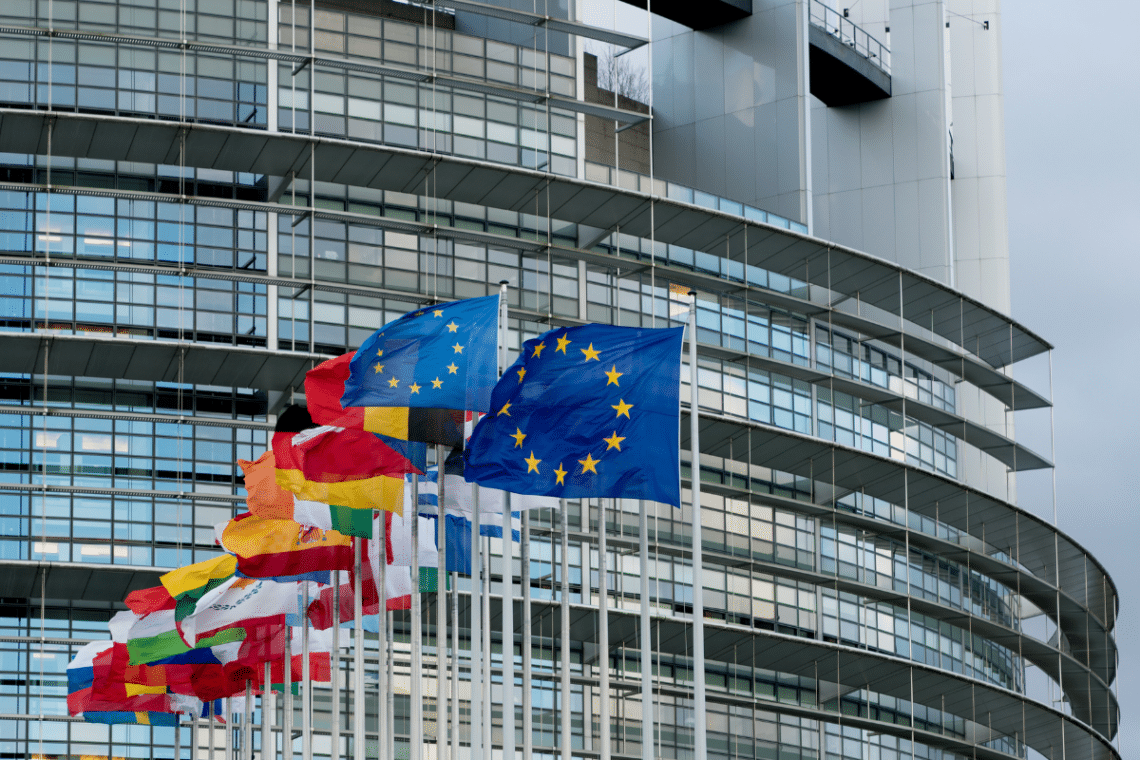
  • Europe: Statement by the Investment Migration Council (IMC) concerning the European Commission’s Legislative proposals to strengthen the EU’s anti-money laundering and countering of terrorism financing frameworks.

    Europe: Statement by the Investment Migration Council (IMC) concerning the European Commission’s Legislative proposals to strengthen the EU’s anti-money laundering and countering of terrorism financing frameworks.

    Published: 23 July 2021

    On the 20 July 2021, the European Commission presented a new package of legislative proposals to strengthen the EU’s anti-money laundering and countering terrorism financing (AML/CFT) rules. The package consists of:

    • A Regulation establishing a new EU AML/CFT Authority;
    • A Regulation on AML/CFT, containing directly-applicable rules, including in the areas of Customer Due Diligence and Beneficial Ownership;
    • A sixth Directive on AML/CFT (“AMLD6”), replacing the existing Directive 2015/849/EU (the fourth AML directive as amended by the fifth AML directive), containing provisions that will be transposed into national law, such as rules on national supervisors and Financial Intelligence Units in Member States;
    • A revision of the 2015 Regulation on Transfers of Funds to trace transfers of crypto-assets (Regulation 2015/847/EU).

    With regard to investment migration, the European Commission proposed that ‘operators involved on behalf of third country nationals in the context of investor residence schemes’ (p.8) are made subject of the EU AML/CFT rules.

    With regard to citizenship by investment, however, the European Commission states in the proposal that ‘schemes that offer citizenship of a Member State in exchange for pre-determined payments and investments, do not comply with the principle of sincere cooperation (Article 4(3) TEU) and the fundamental status of citizenship of the Union as laid down in the Treaties (Article 20 TFEU). As a consequence, the Commission does not propose to regulate such schemes’ (fn 19).

    The IMC has been restlessly working on the strengthening of standards under which investment migration programmes operate. In 2019, the IMC, in coordination with BDO USA, Exiger, and Refinitiv, formed a Due Diligence Working Group which examined the state of play of due diligence and explored the potential for creating minimum standards for both agents dealing with investment migration programmes and governments hosting such programmes. Two Reports were published by Oxford Analytica in January 2020, based on the conclusions of the IMC\Due Diligence Working Group and interviews of Government representatives.

    The First Report, ‘Due Diligence in Investment Migration: Current Applications and Trends’, explained the circumstances and trends in the field of investment migration, while the Second Report, ‘Due Diligence in Investment Migration: Best Approach and Minimum Standard Recommendations’ recommended the adoption of minimum standards in investment migration.

    We welcome that the proposal of the European Commission to regulate the operation of investment migration and to create strict common standards for all parties working in the field of investment migration are largely in line and come very close to the recommendations made in the Second Report published by IMC.

    Notwithstanding the strong efforts of the IMC to enforce the recommended standards in the field, the lack of regulation on international or supranational level has prevented the full implementation of the recommended standards so far. The IMC, therefore, proposed on numerous occasions to work together with the EU, as well as with other relevant organisations, towards the strengthening of the minimum due diligence standards and regulation of investment migration. To that end, the IMC welcomes the proposal of the European Commission for regulation of residence by investment.

    It is disappointing, however, that the European Commission decided not to propose regulation of citizenship by investment. The IMC’s position is that both citizenship and residence by investment should be effectively regulated to prevent the risks inherent to these programmes. The explanation included by the European Commission in the draft proposal, that citizenship by investment cannot be regulated because such programmes ‘do not comply with the principle of sincere cooperation (Article 4(3) TEU) and the fundamental status of citizenship of the Union as laid down in the Treaties (Article 20 TFEU)’ (fn 19) is largely based on the arguments of the European Commission used for the purposes of the infringement procedures against Cyprus and Malta rather than reflecting EU law It is, therefore, unacceptable for the IMC, which supports a rule-of-law based approach. It is clear that citizenship is in the national competence of the member states, while the EU does have competence in Anti-Money-laundering regulation. Therefore, it is not appropriate and hypocritical for the EU Commission to propose to exclude an area of their stated concern, while at the same time bringing forward a mere argument that it wishes to make in a potential court case against one or more of its member states

    It is hoped that the final outcome of the infringement procedures above would clarify EU law on the subject matter and that the European Commission would act accordingly to the law. Meanwhile, it is clear that Citizenship-by-Investment is a reality, in the EU and globally, and should be regulated and covered by Anti-Money-laundering regulations everywhere. Deciding, however, not to propose regulating of citizenship by investment simply on an assumption that such programmes are incompatible with EU law (which most leading EU law experts believe they are not), is prejudicative and amounts to a missed opportunity if not duty of the EU to bring regulation in a field where this is just as much required as the other professional activities that are now proposed to be added under AML/CFT regulatory framework.

    European commission Press Release: https://ec.europa.eu/commission/presscorner/detail/en/ip_21_3690

    For the full proposal for a Regulation of the European Parliament and of The Council on the prevention of the use of the financial system for the purposes of money laundering or terrorist financing click here

  • Canada: Settlement Services Get Thumbs Up From New Immigrants

    Canada: Settlement Services Get Thumbs Up From New Immigrants

    Source: cimmigrationnews.org

    Published: 23 July 2021

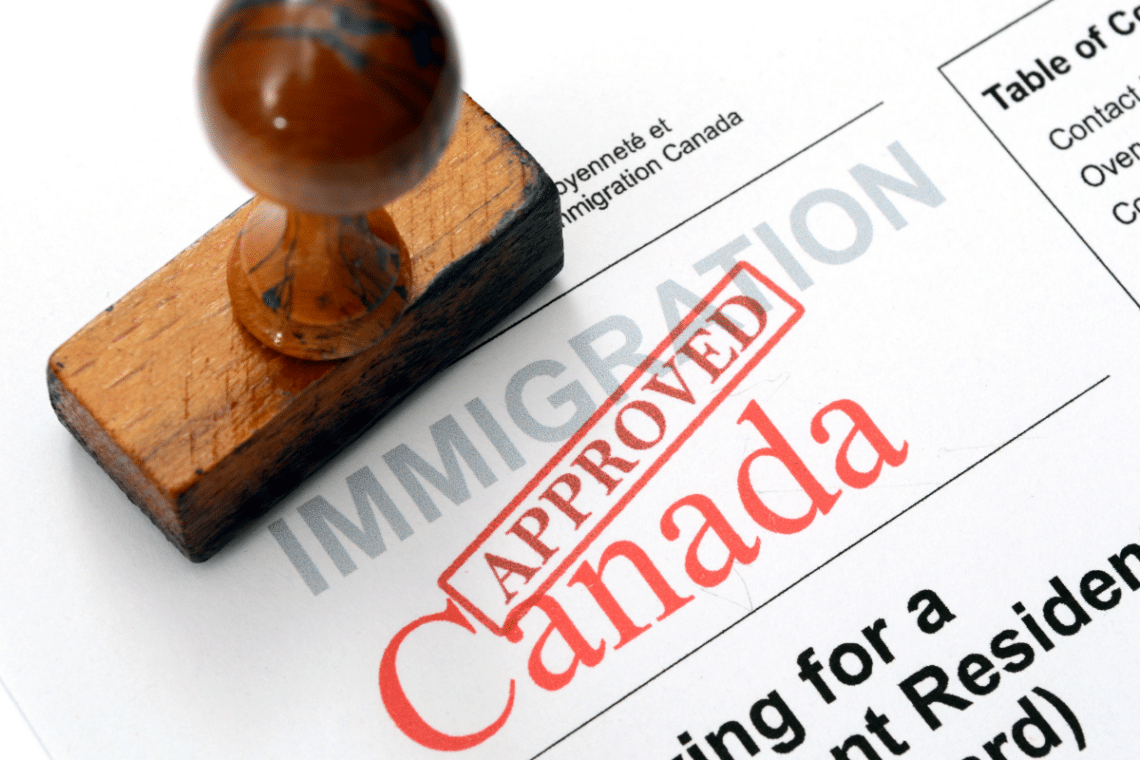
    Canada immigration news: The first-ever Settlement Outcomes Highlights Report released by Immigration, Refugees and Citizenship Canada saw high marks for settlement services for immigrants.

    “Settlement services play a fundamental role in our immigration system. They’re the key ingredient of a newcomer’s success in Canada, whether it’s help getting a job, finding a place to live or learning English or French,” said Immigration Minister Marco Mendicino. 

    “With immigration playing a central role in our post-pandemic recovery, these findings will help us ensure that every new Canadian has what they need to thrive in this country.”

    In the high-level analysis and summary of the immigrant experience in Canada, the report outlines the successes and challenges of newcomers from 2015 to 2019, with an emphasis on their use of settlement services.

    Immigrants Feel Welcomes By New Communities

    “The majority of newcomers who received settlement services reported they were useful and met their needs,” reported the IRCC. “Newcomers said that these services enriched their knowledge of life in Canada, improved their language skills in English or French, prepared them for the Canadian labour market and helped them connect with organizations in their communities.”

    Canada’s settlement program, which is delivered by 572 organizations outside of Quebec, helped more than one million newcomers in the four years that ended March 31, 2019.

    Although all permanent residents and protected persons are eligible for IRCC-funded settlement services, not all of them make equal use of these services. During the time period of the report, 48 per cent of those who used settlement services were economic class principal applicants or their spouses and dependants, 25 per cent were family class immigrants, and 23 per cent were refugees or protected persons.

    The vast majority, 92 per cent of newcomers, agreed that their community was welcoming to newcomers.

    Although this latest report from the IRCC measured only the period prior to the start of the pandemic, its findings line up perfectly with other studies done since then.

    Canada Deemed Best Place To Start A Business

    In a report released in February, the residence and citizenship planning firm of Henley & Partners and the deep tech analytics company Deep Knowledge Analytics crunched the numbers and showed Canada was the best place for investors to get permanent residence during the COVID-19 pandemic.

    That report, Investment Migration Programs Health Management and Risk Readiness Assessment, provided a detailed analysis of 31 countries which offer residence-and citizenship-by-investment (RCBI) programs. Canada’s offerings through its Start-Up Visa program made it the best deal in a COVID-19-embattled world.

    The country has also moved up in the rankings of the friendliest places on Earth for immigrants, an international think-tank’s report revealed late last year.

    “Among English-speaking countries, Canada is becoming a more attractive and inclusive global destination,” said Thomas Huddleston, director of research for Migration Policy Group late last year.

    “Canada, along with New Zealand, is taking the place of previous top-ranking countries such as Australia, the UK and the United States, which all go down in the Migration Integration Policy Index (MIPEX) rankings this round under pressure from populist political forces.”

    The MIPEX’s international scorecard ranked the policy performance of 52 countries from five continents. In 2020, Canada received a high score of 80, placing it fourth in the world for its comprehensive, immigrant-friendly policies that emphasize equal rights, opportunities and security for newcomers.

  • St. Kitts and Nevis: Staff Concluding Statement of the 2021 Article IV Mission

    St. Kitts and Nevis: Staff Concluding Statement of the 2021 Article IV Mission

    Source: imf.org

    Published: 6 July 2021

    Washington, DC: On June 22, 2021 the virtual 2021 Article IV mission for St. Kitts and Nevis concluded.

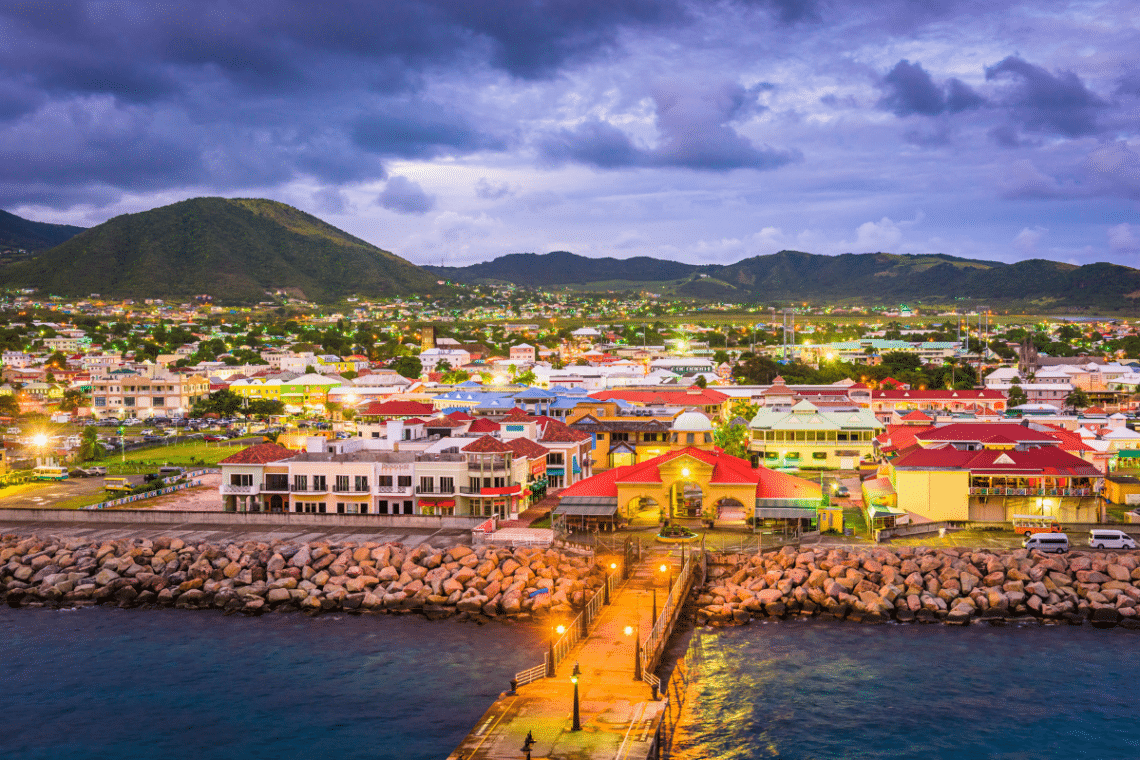
    ‘The impact of the COVID-19 pandemic on St. Kitts and Nevis’ tourism-dependent economy has been severe, despite timely government actions that kept domestic infections in 2020 the lowest in the Western Hemisphere. A rebound in tourism should prompt a strong recovery from 2022 onward, but risks to the outlook are significant. Containing the pandemic and supporting the economy are near-term policy priorities. As the recovery takes hold, policy focus should shift to rebuilding fiscal buffers by resuming to save part of the Citizenship by Investment (CBI) revenues, preparing the financial system for exit from the temporary support measures and pursuing structural reforms to support productivity, economic competitiveness, and human capital’.

    The Statement, which consists of preliminary findings from an official virtual visit to the nation is available in full here

  • Malta: NGOs short-changed by donations error receive €1m in passport money

    Malta: NGOs short-changed by donations error receive €1m in passport money

    Source: timesofmalta.com

    Published: 10 July 2021

    Three major charitable organisations that suffered a shortfall in donation income due to a technical error by a telecoms provider have received a collective total of €1 million earned from Malta’s golden passport scheme. 

    The €1 million donation from the National Development and Social Fund will be split between the Malta Community Chest Fund (€500,000), Dar tal-Providenza (€350,000) and Caritas (€150,000). 

    Each of those organisations were left in the lurch earlier this year after GO informed them that due to a technical problem, donations pledged to them during telethons held between October 2020 and January 2021 had been double-counted. 

    The error led to a total shortfall of €1.4 million and left affected NGOs scrambling to revise plans. Prime Minister Robert Abela had subsequently said the government would step in to help the organisations and their work. 

    The NDSF was established in 2015 to manage 20 per cent of income received from Malta’s cash-for-passports scheme and residence scheme. Its mandate is to use for the advancement of education, research, innovation, social purposes, justice and the rule of law, employment initiatives, the environment and public health.

    NDSF CEO Ray Ellul noted that the fund had already made significant investments in the charitable sector over the years, including an €8 million investment in St Michael Hospice in Santa Venera and a €1.5 million investment to upgrade Caritas facilities in San Blas and Blata l-Bajda. 

    Parliamentary Secretary for Citizenship Alex Muscat said that the government would continue to push to “attract foreign direct investment because this leads to benefits for local communities.”  

Pin It on Pinterest

Skip to content