Category: News

  • Europe: IMC Statement in ref to the October 2021 study of the EPRS.

    Europe: IMC Statement in ref to the October 2021 study of the EPRS.

    Published: 4 November 2021

    On the 21 October 2021, the European Parliamentary Research Service (EPRS) published a Study – European added value assessment (EAVA) intended to support the drawing up of a legislative-initiative report on Citizenship and residence by investment (CBI/RBI) programmes by the European Parliament’s Committee on Civil Liberties and Home Affairs (LIBE Committee). The ERPS defined five policy options for the future of investment migration programmes in the EAVA:

    • Phasing out CBI/RBI programmes;
    • Taxing CBI/RBI programmes;
    • Regulating conditions, guarantees and safeguards of CBI/RBI programmes;
    • Introducing minimum presence requirements for RBI schemes and amending the scope of the Long-term Residence Directive (2003/109/EC);
    • Regulating access to the EU for third countries with CBI/RBI schemes.

    The Investment Migration Council (IMC) welcomes the EAVA and EPRS efforts to take into consideration both positive and negative aspects of investment migration programmes. We are also pleased to see that our efforts in engaging are useful and that many academic research papers and reports we published or worked on have been consulted for the preparation of the EAVA.   

    The IMC has been restlessly working on the strengthening of standards under which investment migration programmes operate. Thus, in 2019, the IMC together with due diligence experts BDO USA, Exiger and Refinitiv formed a Due Diligence Working Group to examine the state of due diligence within IM and then explore the potential for creating minimum standards for agents dealing with IM programmes and governments with such programmes. The work of the Due Diligence Working Group resulted in the publication of two reports by Oxford Analytica in 2020. The First Report, ‘Due Diligence in Investment Migration: Current Applications and Trends’, explained the circumstances and trends in the field of investment migration, while the Second Report, ‘Due Diligence in Investment Migration: Best Approach and Minimum Standard Recommendations’ recommended the adoption of minimum standards in investment migration. These two reports present the actual situation on the ground and offer solid solutions to the existing problems in the field. The EAVA closely resembles some of the observations and recommendations made in the reports even if it does not directly rely on them. However, we feel that EPRS has not used the reports to their full potential, omitting to take into consideration and elaborate further the proposed minimum due diligence standards. The two reports were conducted by highly respectable due diligence experts with significant experience in the field and represent a first yet solid attempt for setting common standards for the investment migration industry.

    With regard to the suggested policy options in the EAVA, the IMC is supportive of the third option. In fact, the IMC is a strong advocate of regulating  investment migration and has repeatedly offered its support and cooperation in the field to international and supranational organisations. 

    We welcome that the third option for regulating conditions, guarantees and safeguards of investment migration comes very close to the recommendations made by the IMC and expert due diligence providers for creating strict harmonised standards for all parties working in investment migration.

    Unlike other policy options defined in the EAVA that either start with the premise that investment migration has essentially detrimental effects and should, therefore, cease to exist or be made less attractive through certain measures, the third option offers a lasting solution that addresses risks inherent to investment migration while allowing for continuity of debt-free capital inflows to Member States with investment programmes. Furthermore, and as recognised by the ERPS, the legal basis for phasing out citizenship by investment by the EU are weak and even if such a step is taken, heightened demand for other, similar, migration pathways would rise. The IMC, therefore, does not support the first option suggested by the EPRS.

    Similarly, the second option is aimed at compensating for negative externalities and/or discouraging the use of investment programmes. To that end, the EPRS has suggested that tax is introduced similar to the tax demanded from environmental polluters. However, unlike pollution that has proven negative effects, no known negative effects of investment migration have been established or quantified yet. While associated risks cannot be denied and should be addressed accordingly, investment migration has  contributed significantly to financial inflows of states with such frameworks. The IMC is, therefore, of the  view that investment migration should not be discouraged but encouraged along with the strengthening of transparency and harmonised due diligence standards.

    Regulation of investment migration by implementing measures to promote transparency, consult and facilitate audits at EU level, as suggested by the third policy option, is an acceptable and much-needed solution. In such scenario, investment migration would be regulated in four general areas: 1) Regulation of the service providers’ value chain; 2) Regulation of approvals and approval procedures; 3) Regulation of investments and capital inflows related to the programmes; 4) Information and consultation with the EU when programmes are established and modified, and EU level audit of the schemes. There are solid legal bases in EU law for such regulation of investment migration that would minimise inherent risks of the industry allowing for increased transparency, oversight and higher due diligence standards.

    Contrary to this, introducing minimum residence requirements for residence by investment programmes as suggested by the fourth option would discourage investors (who are usually busy people with dynamic lifestyles) from applying, making investment migration unattractive. Same applies to the fifth option which is related to enhanced vetting of third-country nationals entering the EU. Such policy is primarily meant for non-EU countries with investment programmes rather than for EU Member States and is, therefore, insufficient in itself. Enhancing vetting of third-country nationals who have gained their citizenship through investment may create discrimination among citizens of same nationality and make investment migration unattractive.

    In summary, the suggested option for regulation of investment migration is the only viable option that would address all risks inherent to the industry while maintaining the benefits. Notwithstanding the strong efforts of the IMC to enforce minimum due diligence standards in the field, the lack of regulation on an international or supranational level has prevented the full implementation of such standards. The IMC, therefore, welcomes the proposal of the EPRS for regulation of investment migration, hoping that the third policy option will be seriously taken into consideration and further elaborated by the LIBE Committee.

    For the full Study, the European Parliamentary Research Service (EPRS) published, please click here

  • Antigua & Barbuda: CIU to ‘share more culture’ with new citizens based on Expo 2020 Dubai experience

    Antigua & Barbuda: CIU to ‘share more culture’ with new citizens based on Expo 2020 Dubai experience

    Source: antiguaobserver.com

    Published: 4 November 2021

    The Citizenship by Investment Unit (CIU) is looking to engage more with its successful applicants in the future, following the warm reaction it has received at Expo 2020 Dubai.

    The unit forms part of the Antigua and Barbuda delegation to the world expo and is one of the many socio-economic and cultural offerings on show, with the hopes of generating travel and business to the twin islands.

    Charmaine Quinland-Donovan, CEO of the CIU, explained that their experience so far has shown that many of the people who become citizens but remain based abroad are yearning to delve into the culture.

    For this reason, she says the CIU will be working to ensure it fills that gap as best as it can.

    “We’ve had the opportunity to interact with some of our new citizens, persons who became Antiguan and Barbudan citizens through the programme, and I think what we need to do is come out more, allow them to experience our culture, experience what it is to be Antiguan and Barbudan.

    “Yes, you’re a citizen, but because you’re not living in the country and not immersed in the culture, I think you miss some of the components of being Antiguan.

    “So…going forward, what we will try to do with our [Citizenship by Investment Programme] CIP-related events is infuse a lot more culture, because based on the reaction I saw from the new citizens here, they feel more connected once they’re able to experience the culture.”

    The importance of the CIP to the country’s economy can never be overstated, as it consistently generates high levels of revenue; those levels could still increase, based on Quinland-Donovan’s enthusiasm, with more emphasis placed on sharing more of the culture.

    And speaking of importance, the CEO made a bold statement while discussing the unit and how it has been faring throughout the pandemic, referring to it as possibly the country’s foremost salvation over the past several months.

    “Had it not been for the Citizenship by Investment Unit (CIU), [Antigua and Barbuda] would have probably not been able to sail through the pandemic as much as [it] did,” she said.

    “The funding generated by the CIU has been helpful to the government and enabled it to establish the Infectious Disease Center. They’ve retrofitted the technical college on Nugent Avenue to be a secondary hospital [and] we’ve also assisted the government with acquiring vaccines [and] PPE.”

    Like many of the other members of the Antigua and Barbuda delegation, Quinland-Donovan added that the quality of the content she has experienced in Dubai is inspiring and she will be looking to replicate some elements in their operations.

    “I’ve been able to see a lot of things that we can probably piggyback on to improve the product that we deliver,” she said.

  • United States: IMF Concludes 2021 Article IV Consultation with St. Kitts & Nevis and calls for further efforts in AML/CFT/Tax cooperation frameworks

    United States: IMF Concludes 2021 Article IV Consultation with St. Kitts & Nevis and calls for further efforts in AML/CFT/Tax cooperation frameworks

    Source: imf.org

    Published: 29 October 2021

    On September 13, the Executive Board of the International Monetary Fund (IMF) concluded the Article IV consultation with St. Kitts and Nevis.

    St. Kitts and Nevis entered the Covid-19 pandemic from a position of fiscal strength following nearly a decade of budget surpluses. A significant part of the large CBI revenues was prudently saved, reducing public debt below the regional debt target of 60 percent of GDP and supporting accumulation of large government deposits.

    Prompt government action helped contain the pandemic’s public health impact. At the onset of the pandemic the government swiftly restricted inbound travel, introduced a month-long national lockdown, and procured protective and medical equipment. The reopening of borders at end-October 2020 has been accompanied by strict safety protocols. The response measures effectively mitigated the pandemic’s human cost, with St. Kitts and Nevis having had the lowest per capita case count in the Western Hemisphere and no mortalities in 2020.

    But the impact on the economy has been severe. The complete halt in cruise ship arrivals and very few stayover tourists since the first quarter of 2020 compounded on the pandemic’s impact on domestic activity. The pandemic resulted in an estimated annual decline in GDP of 14 percent, and the general government’s first fiscal deficit (4.7 percent of GDP) since 2010, financed by drawing down sizeable deposit buffers.

    An expected rebound in tourism sets the stage for a strong recovery from 2022 onward, but risks to the outlook remain significant. Following a loss of the 2020–21 winter tourism season and slow resumption of tourism inflows to date, staff projects a small further decline in GDP of 1 percent in 2021, followed by 10 percent growth in 2022. However, the recovery path could be derailed should the pandemic lead to further sustained disruptions on the anticipated pace of tourism recovery and domestic activity. Other risks include financial sector uncertainties, natural disasters, and lower-than-expected CBI receipts.

    Executive Board Assessment

    Executive Directors agreed with the thrust of the staff appraisal. They noted that St. Kitts and Nevis entered the COVID-19 pandemic from a position of fiscal strength and commended the authorities’ prompt and effective policy response, which has helped contain the pandemic’s economic and health impact. Directors agreed that, in the near term, the key policy priorities are containing the pandemic and supporting the economic recovery. In particular, they emphasized that reaching herd immunity through vaccination is the chief priority to save lives and livelihoods.

    Directors agreed that fiscal relief measures should be kept in place until the recovery firmly takes root. They noted that robust levels of public investment would further support economic activity. Given the small economy’s susceptibility to natural disasters and dependance on tourism and volatile revenues from the Citizenship by Investment (CBI) Program, Directors concurred that once the recovery is firmly established, the government should resume saving part of the CBI revenues to rebuild fiscal buffers, which will also provide additional fiscal space to mitigate contingent and long-term fiscal pressures.

    Directors agreed on the need to preserve the stability of the financial system by increasingly focusing on building readiness to exit the temporary support measures. They recommended reviewing and formalizing crisis management plans, containing risks in the systemic bank, strengthening supervision of non-banks, developing a more robust plan to divest unsold lands, and pursuing reforms to facilitate asset recovery. While commending the authorities for promoting financial integrity, securing correspondent banking relationships, establishing CBI program safeguards and bolstering the AML/CFT and tax cooperation frameworks, Directors called for further efforts in these areas.

    Directors encouraged structural reforms that raise productivity growth, economic competitiveness, and human capital. In this regard, they particularly welcomed the authorities’ agenda to diversify energy sources and channel CBI revenues into other sectors besides tourism and for infrastructure that protects against natural disasters.


    [1] Under Article IV of the IMF’s Articles of Agreement, the IMF holds bilateral discussions with members, usually every year. A staff team visits the country, collects economic and financial information, and discusses with officials the country’s economic developments and policies. On return to headquarters, the staff prepares a report, which forms the basis for discussion by the Executive Board.

    [2] At the conclusion of the discussion, the Managing Director, as Chairman of the Board, summarizes the views of Executive Directors, and this summary is transmitted to the country’s authorities. An explanation of any qualifiers used in summings up can be found here: http://www.IMF.org/external/np/sec/misc/qualifiers.htm.

  • UAE: Fashion mogul Giorgio Armani conferred with UAE golden visa

    UAE: Fashion mogul Giorgio Armani conferred with UAE golden visa

    Source: gulfnews.com

    Published: 25 October 2021

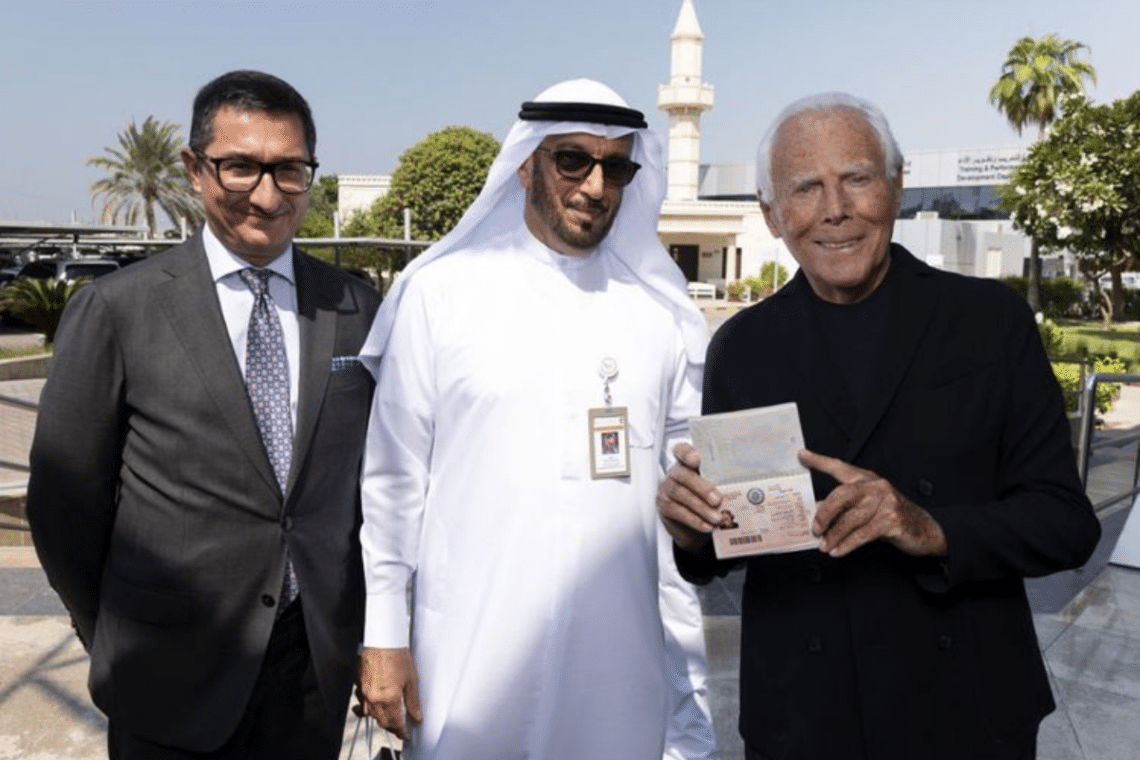
    Fashion mogul Giorgio Armani is the latest recipient of the UAE golden visa, which has been bestowed upon a number of noted celebrities in recent months.

    Armani was conferred the UAE golden visa by Major General Mohamed Ahmed Al Marri, Director General of General Directorate of Residency and Foreigners Affairs in a ceremony held at the General Directorate of Residency and Foreigners Affairs in Al Jafaliya.

    The golden visa was instituted by the UAE government in 2019 and grants a 10-year residency in recognition of special contributions to the country. The honour is granted to investors and entrepreneurs, as well as special talents in a variety of fields from science to entertainment, sports, academia and philanthropy.

    The visa is also granted for 10 years to accomplished creative talent in the fields of literature, culture, fine arts, performing arts, and design, as well as those in the heritage, history and knowledge-related sectors as well as intellectual and creative industries.

    In recent months, several celebrities have been bestowed the golden visa, including Bollywood star Sanjay Dutt, South Indian powerhouses Mammootty, Mohanlal, Dulque Salman and Siddique, along with veteran singer KS Chitra.

    Armani is one of the most famous faces in the world of fashion, having dressed UK royals, Hollywood glitterati, along with Bollywood and Arab stars. Born in 1934, the iconic clothing designer spearheads the Armani empire, which encompasses restaurants and hotels, including the Armani Hotel in the Burj Khalifa.

    Launching his fashion house with his business partner Sergio Galeotti in 1975, the company’s first collection — a men’s clothing line — debuted that year. Armani launched a women’s collection the following year.

    America sat up and took notice of his designs in the ‘80s when his power suits found their way into the hugely popular TV series ‘Miami Vice’ courtesy of Don Johnson, along with Richard Gere who gave the designs more eyeballs in ‘American Gigolo’. Soon, the rest of Hollywood followed.

  • World: The sovereignty cartel: What citizenship for sale schemes tell us about the nature of sovereignty

    World: The sovereignty cartel: What citizenship for sale schemes tell us about the nature of sovereignty

    Source: blogs.lse.ac.uk

    Published: 26 October 2021

    What makes sovereignty possible? Drawing on the example of citizenship for sale programmes, J. Samuel Barkin argues that sovereignty is built on state collusion – states work together to privilege sovereignty in global politics because they benefit from its exclusivity.

    Last summer, the Guardian published a series of stories on the alarming participants in the ‘citizenship for sale’ programme in Vanuatu. They reported that the programme, which charges $130,000 USD for a single person or $180,000 for a family of up to four, provides purchasers with citizenship, including the right to live in Vanuatu; Commonwealth citizenship; no income, wealth, inheritance, or property taxes; and visa-free travel to 113 countries, including the United Kingdom and the European Union – all without ever entering Vanuatu.

    While Vanuatu is neither the first nor the only country to introduce a ‘citizenship for sale’ scheme, it has earned significant notoriety because of the notorious people who seem to have taken advantage of citizenship purchasing opportunities. Decrying free access to Europe for “crypto moguls, wanted men, and even a prime minister,” Guardian reporters Euan Ward and Katie Lyons warn of an unanticipated scenario where ‘bad people’ buy citizenship in Vanuatu, change their names, obtain a passport in their new names, and travel unfettered in Europe despite being unwelcome.

    More than half of the purchasers of Vanuatu passports are Chinese nationals, but the reporters raised flags about other newly-minted Vanuatu citizens, including Italian businessman Gianluigi Torzi, and South African alleged cryptocurrency thieves Raees and Ameer Cajee. The account emphasises the vulnerability to the EU of non-EU nationals in this situation, as do other stories about citizenship-for-sale schemes in British and European outlets, including the BBC’s coverage of the Maltese scheme. Perhaps for these reasons, in recent years the EU has encouraged its members and surrounding states to halt passport-for-sale programmes, and Vanuatu is at risk of losing its citizens’ rights to travel visa-free to the UK and EU.

    At first glance, the citizenship-for-sale programmes in Vanuatu and elsewhere look like they expose a weakness in – if not breakdown of – state sovereignty, and that a crackdown on these programmes would herald a rehabilitation of state sovereignty. From Vanuatu, the BBC quotes a journalist asking “Is it right to sell our hard-won sovereignty to the highest bidder?” while Owen Parker characterises these programmes as “the commercialisation of sovereignty” which potentially heralds a very different type of post-national citizenship than the one that the EU envisioned in its formation. This approach sees the tightening of regulations against citizenship sale as a way for states to regain control.

    Yet another approach suggests that citizenship-for-sale programmes are themselves a display of sovereignty. Jason Sharman, studying microstates, notes that states “selling sovereign prerogatives” shows the strength of micro-state sovereignty. After all, a sovereign state – any sovereign state, from the smallest to the largest – should, as a principled part of its sovereignty get to select its citizens. Some right-wing groups frame citizenship-for-sale as putting sovereignty where it should be: in ‘the man’ and not ‘the state.’ Discussing the Maltese scheme, Ayelet Shachar and Rainer Baubock characterise EU intervention in Malta’s distribution of passports-for-money as an intervention in Malta’s sovereignty from the EU. In this view, citizenship-for-sale is an expression of sovereignty and regulating it limits sovereignty.

    States work together to privilege sovereignty in global politics because they collectively benefit from sovereignty’s exclusivity.

    So which is it? My recent book, The Sovereignty Cartel, suggests that both of these approaches – and the debate about citizenship-for-sale as a whole – miss a fundamental property of sovereignty, and in so doing, fail to see that both citizenship-for-sale programmes and their regulation are tools of the sovereignty cartel. I make the argument that sovereignty itself is a product of state collusion.

    Sharman notes that “the current international system presents even its smallest and weakest members with choices rather than imperatives.” This is true, but why is the interesting part. Looking at different phenomena in global politics from international courts to trade to migration and citizenship, I demonstrate that states work together to privilege sovereignty in global politics because they collectively benefit from sovereignty’s exclusivity. The association of the state and sovereign property rights benefits all states – big and small, powerful and weak, friend and enemy – and, as such, they collude to maintain sovereignty’s continuing conceptual and empirical dominance.

    In the book, I discuss various commercialisations of sovereignty, including flags of convenience and citizenship-for-sale. Empirically, I suggest that the sovereignty cartel has a high but not unlimited tolerance for these schemes because of its interest in reifying state sovereignty as a property right. While the tolerance is high, it is limited by perceptions that one state’s exercising of this sovereignty poses a significant imposition on another state’s ability to exercise its sovereignty. In that case, the sovereignty cartel defends states’ sovereign abilities to control who enters and exits their territory effectively. In other words, the sovereignty cartel makes possible both citizenship-for-sale and the pushback these programmes receive.

    What is ‘at stake’, then, in citizenship-for-sale programmes is not only the ability of states to choose their citizens, or the risk that ‘bad’ people will circumvent travel restrictions – the debate itself presents an opportunity to reify, and prop up, a social construction of sovereignty in which all states have a vested interest. For that part, though, we will need to look beyond the Guardian’s coverage.

  • Cyprus: EC confirms Cyprus has responded on golden passports

    Cyprus: EC confirms Cyprus has responded on golden passports

    Source: cyprus-mail.com

    Published: 26 October 2021

    The European Commission has received a response from Cypriot authorities regarding the island’s now-defunct ‘golden passports’ scheme, and will continue dialoguing with Nicosia, a Commission spokesman said on Tuesday.

    During a press briefing, Commission spokesman for Rule of Law Christian Wigand was asked whether the EU’s executive body has obtained a copy of the interim findings of a Cypriot committee of inquiry that had looked into the citizenship-by-investment scheme.

    Wigand would neither confirm nor deny the Commission having received that interim report.

    But, he added, the Commission is “following closely” the matter of Cyprus’ passports scheme.

    Wigand said the infringement proceedings launched by the Commission are currently in their second stage, following the dispatch of a reasoned opinion to Cypriot authorities back in June.

    If the Commission concludes that a country is failing to fulfil its obligations under EU law, it may send a reasoned opinion – a formal request to comply with EU law. It explains why the Commission considers that the country is breaching EU law. A member state can then decide whether to accept or negotiate the opinion or risk that the Commission will bring the case to the European Court of Justice.

    According to Wigand, Nicosia has since responded to the Commission’s reasoned opinion.

    “We have received the response from Cypriot authorities, and are evaluating it in terms of the next steps.”

    The Commission had launched infringement proceedings against Cyprus – and Malta – initially in October 2020. But in November of the same year Cyprus axed its controversial citizenships programme after an undercover Al Jazeera video showed former House president Demetris Syllouris and former Akel MP Christakis Giovanis offering help to an imaginary Chinese businessman with a criminal record to secure citizenship.

    Despite terminating the citizenships scheme, authorities in Cyprus continued processing some 1,400 applications filed before the programme was nixed.

    That drew the EU’s strong disapproval. In a hard-hitting statement in June this year, the Commission said it had decided to take further steps in the infringement procedures against both Cyprus and Malta regarding their respective investor citizenship schemes.

    “While Cyprus has repealed its scheme and stopped receiving new applications on November 1, 2020, it continues processing pending applications,” the Commission said.

    “Hence, today the commission decided to take the next step in the procedure against Cyprus by issuing a reasoned opinion. The commission considers that the concerns set out in the letter of formal notice were not addressed by Cyprus,” it added.

    The Commission gave Cyprus two months to take the necessary measures to address its concerns – mainly that investors with no links to the country other than their investment were granted passports.

    A committee of inquiry here in Cyprus into the citizenship scheme found that 53 per cent of the 6,779 citizenships granted overall were unlawful, and said politicians and institutions had political responsibilities while certain applicants and service providers may be held criminally culpable. The probe covered the period between 2007, when the scheme was introduced, and August 2020.

  • Washington: FATF Works to Strengthen Financial Transparency, Combat Misuse of Virtual Assets

    Washington: FATF Works to Strengthen Financial Transparency, Combat Misuse of Virtual Assets

    Source: content.govdelivery.com

    Published: 21 October 2021

    FATF Works to Strengthen Financial Transparency, Combat Misuse of Virtual Assets 

    FATF Approves Public Consultation of Revisions to Beneficial Ownership Standards and Updated Guidance on Virtual Assets 

    WASHINGTON — The Financial Action Task Force (FATF) concluded its October plenary today, the sixth session since the start of the ongoing COVID-19 pandemic. With hybrid participation both virtually and in-person in Paris, FATF advanced its core work on virtual assets, beneficial ownership transparency, and illicit finance risks.

    “The United States welcomes the significant work by the FATF to enhance beneficial ownership transparency and provide clear standards and guidance for the virtual asset industry,” said Secretary of the Treasury Janet L. Yellen. “The FATF’s work will continue to strengthen global action against illicit finance.”

    Virtual Assets Guidance

    The FATF approved for publication an updated version of its Guidance on a Risk-Based Approach to Virtual Assets and Virtual Asset Service Providers. The guidance is intended to help jurisdictions and the private sector to implement the FATF’s standards on the virtual assets sector, which were revised in 2018. The FATF’s Virtual Assets Contact Group, the body that undertook this revision and which is co-chaired by the United States and Japan, will now focus its efforts to promote implementation of the standards.

    Proposed Changes to Beneficial Ownership Standards

    The FATF agreed to publish for public consultation proposed revisions to Recommendation 24, which sets the FATF standard regarding beneficial ownership transparency for legal persons. These proposed revisions are intended to improve the quality of beneficial ownership information available to law enforcement and other authorities in a timely manner, facilitate international cooperation, and improve transparency around public procurement to combat corruption. The U.S. strongly supports these enhancements to Recommendation 24 to increase beneficial ownership transparency.

    Upcoming Illicit Finance Risk Report

    The FATF approved the commencement of a study on Illicit Proceeds Generated from the Fentanyl and Related Synthetic Opioids Supply Chain. These dangerous substances are contributing to thousands of overdose deaths a year in North America, and their popularity with traffickers points to its growth in drug markets around the world. The primary objective of the study is to raise global awareness for operational authorities of how the proceeds of this illicit trafficking are laundered by drug trafficking organizations.

    Combating Terrorist Financing

    Strengthening the global response to terrorist financing remains a priority for the FATF. This includes financial networks and support to groups such as ISIS, Al-Qaida (AQ), and Hizballah, as well as racially or ethnically motivated violent extremists, and other terrorist threats. The FATF adopted an update to its 2016 confidential report on terrorist financing risk indicators. This update, co-led by the United States and Germany, includes specific indicators involved in racially-or ethnically motivated terrorist financing. Additionally, the FATF is issuing a public update on ISIS and AQ financing (the first since June 2019). This update builds off of regular internal ISIS and AQ financing assessments that are shared with members of the FATF Global Network.

    Afghanistan

    The FATF also issued a statement on the situation in Afghanistan. It reaffirmed United Nations Security Council Resolutions that Afghanistan should not be used to plan or finance terrorist acts, emphasized the importance of supporting the work of non-governmental organizations in the country and maintaining the flow of humanitarian assistance to the Afghan people, and for governments to facilitate information sharing with their financial institutions on any emerging illicit finance risks related to Afghanistan. The FATF noted that it will continue to monitor the situation in Afghanistan.

    Outcomes of the FATF Plenary, 21 October 2021

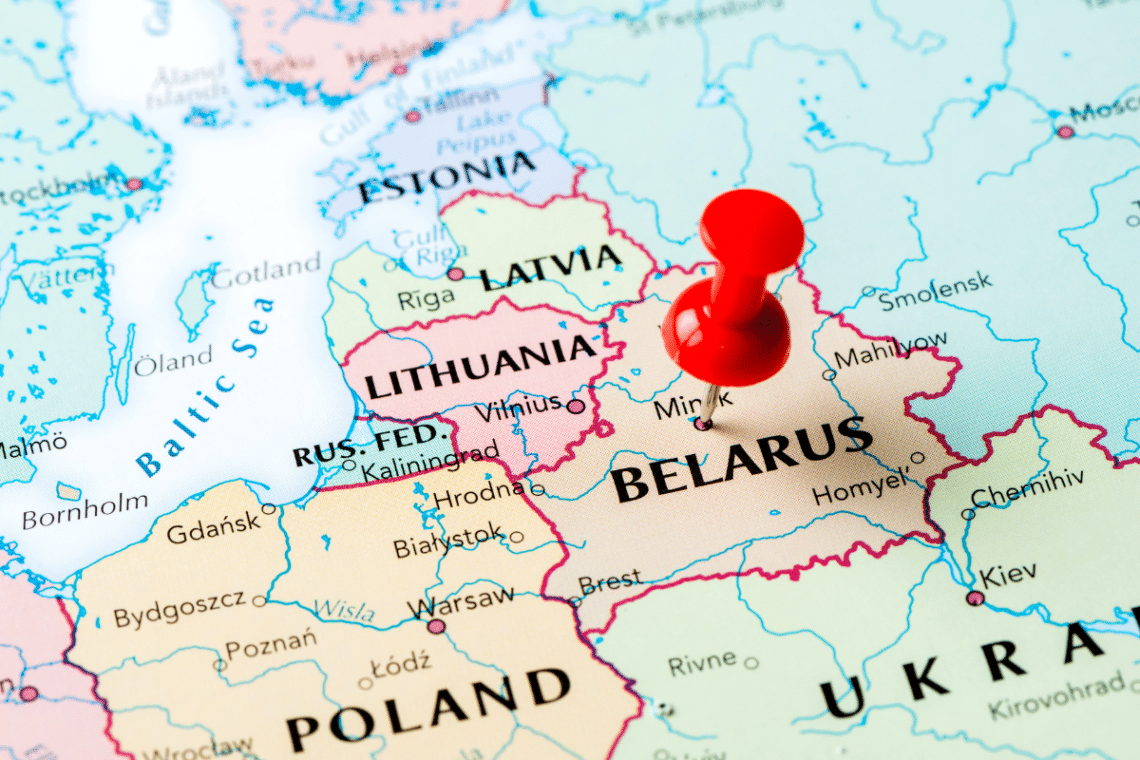
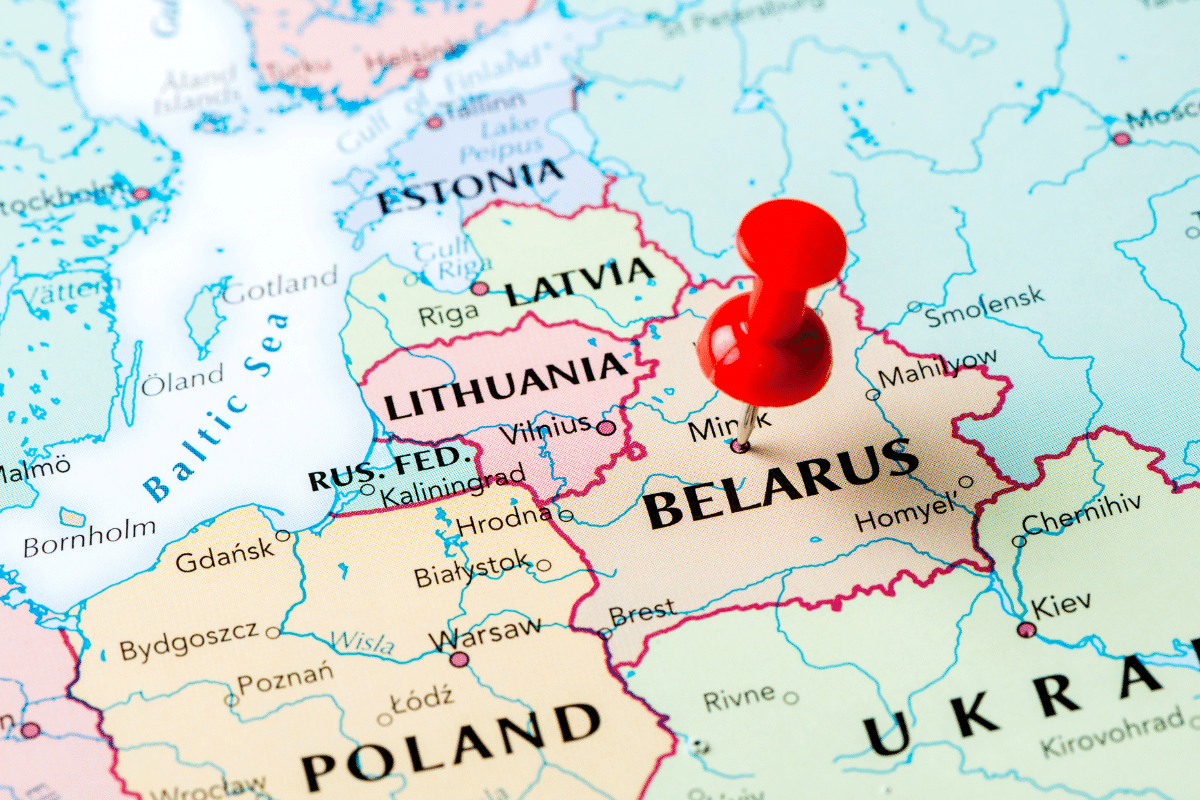
  • Belarus: How Belarus is helping ‘tourists’ break into the EU

    Belarus: How Belarus is helping ‘tourists’ break into the EU

    Source: bbc.com

    Published: 22 October 2021

    Belarus has been accused of taking revenge for EU sanctions by offering migrants tourist visas, and helping them across its border. The BBC has tracked one group trying to reach Germany.

    The mobile phone camera pans left and right, but no-one moves. The exhausted travellers lie scattered among the trees.

    Jamil has his head in his hands, his wife Roshin slumped forward next to him. The others look dead.

    Late afternoon light slants through the forest, the pine trees forming a dense natural prison. They’ve been walking since four in the morning.

    “We’re shattered, absolutely shattered,” Jamil’s cousin Idris intones, almost mechanically.

    The Syrian friends have fought through thickets and waded through foul-smelling swamps to get here. They’ve already missed their first rendezvous with a smuggler, and they’ve run out of food and water.

    The Syrians are numb with cold but don’t dare light a fire. They’ve crossed from Belarus into Poland, so have finally made it to the EU. But they’re not safe yet. Thousands of others, encouraged by Belarus to cross into Poland, Lithuania and Latvia, have ended up in detention instead. At least seven have died of hypothermia in the Polish forest.

    We’ve been tracking Idris and his friends since they left northern Iraq in late September. Idris has recorded their progress on his phone and sent us a series of videos along the way.

    The group are Syrian Kurds, in their 20s, looking to Europe for a better future. They are all from Kobane, the scene of ferocious fighting between Kurdish fighters and Islamic State militants in late 2014.

    But while their motives – political instability at home, fear of conscription, lack of employment – are the familiar refrain of migrants the world over, the route they have taken is new.

    Idris admits he might not have tried to leave Syria if Belarus’s autocratic leader, Alexander Lukashenko, had not offered a new, apparently safer route.

    “Belarus has an ongoing feud with the EU,” he told me, when I asked him why he had decided to attempt the journey to Europe. “The Belarus president decided to open its borders with the EU.”

    Idris was referring to Mr Lukashenko’s warning earlier this year, that he would no longer stop migrants and drugs from crossing into EU member states.

    The Belarus president had been infuriated by successive waves of EU sanctions, imposed following his country’s disputed 2020 presidential election, the subsequent hounding of political opponents, and the forced diversion of a RyanAir jet carrying an opposition journalist and his girlfriend.

    Officials in neighbouring Lithuania say they saw warning signs as early as March.

    “It started as indications from the Belarusian government that they are ready to simplify visa proceedings… for ‘tourists’ from Iraq,” Lithuania’s Deputy Minister of Interior, Kestutis Lancinskas tells us.

    Instead of taking hazardous journeys by boat across the Mediterranean, all migrants now need to do is fly to Belarus, drive for several hours to the border, and then simply cross on foot into one of the three neighbouring EU countries – Poland, Lithuania and Latvia.

    In July and August, Lithuania saw 50 times more asylum seekers than in the whole of 2020.

    “The route is obviously a lot easier than going through Turkey and North Africa,” Idris said.

    He and his friends had started out from Irbil in northern Iraq on 25 September. Idris had been working there and left his wife and twin baby daughters in Kobane, promising they could eventually join him in Europe if he made it.

    They are part of a generation of Syrians whose lives have been blighted by 10 years of civil war. Idris has already spent time as a refugee in neighbouring Turkey.

    “It’s a long story, my friend, and I regret many things,” Idris told me over the phone when I asked him what motivated him.

    “But nothing’s in our control. There’s no future for me in Syria.”

    In one of Idris’s first videos, recorded outside Irbil airport, he is clearly upbeat about the journey ahead. They’ve got their tickets, and seven-day tourist visas for Belarus. They’re ready to go.

    The process so far had been relatively simple. To find out just how simple, we flew to northern Iraq to meet the people involved.

    Irbil is the bustling capital of the country’s autonomous Kurdish region. A city of more than one-and-a-half million people, it’s home to hundreds of thousands of refugees from neighbouring Syria, as well as other parts of Iraq.

    For many, it’s also where the journey to Europe begins.

    Not that you’d know that immediately. There are travel agents, to be sure. Lots of them. But this is a word of mouth business, with travel tips disseminated online in Facebook and chat groups.

    In an office strewn with passports – mostly Syrian – Murad took me through the process. Murad is not his real name. Even though his role is not illegal – all he does is arrange the visas and flights to the Belarusian capital Minsk – he doesn’t want to be identified.

    Back in the summer, with news of Mr Lukashenko’s threat to the EU bouncing all over social media, Murad contacted friends in Belarus, asking about the new visa rules.

    “They said ‘yes, it’s easy now’,” Murad recalled.

    “I knew it’s going to be the same as what happened in 2015 with Turkey.”

    In 2015, Turkey’s President, Recep Tayyip Erdogan, was also in dispute with the EU. He allowed hundreds of thousands of migrants to pass through his country, until the EU agreed to a €6bn (£5bn) deal to help Istanbul meet the cost of the influx.

    For migrants now looking for safe passage via Minsk, Belarusian travel companies initially issued electronic invitations to allow people to board flights for the capital.

    But as cowboy operations started to make money from fake invitations, the rules changed. Now, migrants need a physical visa stamp in their passport before they can book a flight. It takes longer, but still isn’t complicated.

    Next, a smuggler. This is where it gets expensive.

    Murad said he didn’t work with smugglers, advising his clients that it’s actually cheaper and more reliable to find one when they reach Minsk. But when we met one ourselves, it was on the street outside Murad’s office and the two men clearly knew each other.

    We were told that Jouwan – again not his real name – was a veteran smuggler, having arranged trips through Turkey and Greece during the 2015 migration crisis.

    “If you’re using a smuggler,” said Jouwan, “it’s going to cost you a lot. Between $9,000 and $12,000.”

    After all, it was an unpredictable journey, Jouwan said.

    “You’re going through unknown woods, in a foreign country. Robbers are waiting to snatch your money. The mafia is watching you. There are wild animals on the loose, rivers and swamps to cross. You’re leaping into the unknown, even if you’re using GPS.”

    Asked about the authorities in Belarus, Jouwan was clear about their role.

    “They’re facilitating the issue. They’re helping people.”

    When Idris and his friends reached the Belarusian capital Minsk, they found it teeming with migrants all beating the same path to Europe. Idris’s footage from Minsk airport shows a crammed arrivals hall – passengers sprawled out across the floor waiting to be processed.

    In August, Iraqi Airways bowed to pressure from the EU and cancelled direct flights from Baghdad to Minsk. But migrants continue to arrive on flights from Istanbul, Dubai and Damascus.

    Like many who pass this way, Idris and his friends had reservations at Minsk’s Sputnik Hotel, which advertises itself as “ideal for business trips and family holidays”.

    Others have been less fortunate. Footage shared on social media claims to show migrants in sleeping bags, sheltering in a nearby underpass.

    When I reached Idris by phone, he told me they were in touch with smugglers to take them across the Polish border and on to Germany. Their departure was imminent. Idris acknowledged the challenges ahead.

    “We’re crossing the borders illegally. We don’t know what will happen. We can’t trust anyone, not even our smuggler. We’re putting our fate in God’s hands.”

    The trip from Irbil to Belarus, he said, had already cost $5,000 (£3,600) per person, including airfare, hotel reservations and tourist visas. They were still haggling with smugglers about the onward journey.

    A day later, we spoke again. There had been a setback. The group had left Minsk too late to meet a smuggler and make it into Poland. They were now at another hotel, close to the border. The costs were piling up. The group had to take two private cars from Minsk, paying $400 for each.

    Trepidation was setting in, because for all the expense, the outcome could still be disastrous.

    “We don’t know whether we’re going to make it or not,” he told me. “Are we going to get stuck in the woods, or will it just be a matter of four or five hours [walking], just like the smuggler told us?”

    Another short video arrived before they set off.

    “Pray for us,” Idris says into the camera.

    Across Belarus’s north-western border, in Lithuania, we found that the prayers and dreams of thousands of migrants like Idris had been shattered. By August, more than 4,000 had made it across a largely unfenced border.

    Some made the onward journey to Western Europe, but many were caught. They’re now being held in detention centres across the country while Lithuania figures out what to do with them. While some have been granted asylum, so far this has not included any Syrians or Iraqis.

    At Kybartai, in the west, more than 670 migrants have been moved to a converted prison. The authorities are trying to make it as habitable as possible. The warm cells are a definite improvement on the tented camps near the border where the migrants were being accommodated until recently.

    But when we visited, the high walls, razor wire and watchtowers created an unmistakably grim atmosphere. “I need freedom,” several people shouted from their cells.

    The inmates were all single men, from more than 20 different countries. Most were Iraqis and Syrians, but others had come from as far afield as Yemen, Sierra Leone and even Sri Lanka.

    Abbas, from Iraq, said conditions were terrible and the migrants were being treated like criminals.

    “Is it our fault Belarus opened its borders to the EU?” he asked.

    At the end of his journey he was briefly detained by the Belarusian border guards. But it seemed all they had wanted was a souvenir.

    “They took selfies with us and showed us the way,” he said.

    Fed up with his treatment and aware that his $11,000 journey had come to an abrupt, humiliating end, Abbas said he was thinking of going back.

    “But I’m not going to live in Iraq. I’ll live in Turkey. I have no idea what’s going to happen though. I don’t have any money.”

    But even though the detainees recognised they were pawns in a geopolitical tussle between Belarus and the EU, they mostly thanked Mr Lukashenko for giving them this chance.

    “When I get out, I’m going to get his name tattooed on my arm,” Azzal, another Iraqi, told me.

    The flow of migrants into Lithuania has now been stemmed, thanks in part to the country’s increased border security, assisted by the EU’s border management agency, Frontex. But guards also showed us places where the border was still poorly protected, sometimes little more than a gap in the forest.

    At one such spot, Belarusian border guards and soldiers sauntered past on the other side, filming us on a mobile phone but avoiding eye contact.

    “In old times we had really good communication about illegal immigrants,” Vytautas Kuodis, of Lithuania’s State Border Guard Service, told me.

    All that ended over the summer. Calls from the Lithuanian side now go unanswered.

    “Mostly they ignore us,” Mr Kuodis said.

    Although dozens of migrants still try to cross into Lithuania each day from Belarus, most are now heading for Poland.

    Idris and his friends’ second attempt to cross the Polish border ended – like their first – in failure.

    Videos, shot furtively on Idris’s mobile phone, show tense roadside conversations, with voices in Russian, English and Arabic. There was a scary encounter with Belarusian police, who stopped the group, took their passports and told the drivers to return the migrants to Minsk.

    They drove back to the Sputnik Hotel, where the drivers then demanded a fee to recover the group’s passports from the police. At the hotel, Idris and his friends now discovered a growing network of smugglers, sorting out accommodation and logistics. And the hotel was full of new arrivals – Syrians, Iraqis and Yemenis.

    “The numbers are increasing every day,” Idris says in a video shot outside the Sputnik.

    To add to the group’s complications, their tourist visas expired, forcing them to check out of the hotel and into a flat.

    Finally, 11 days after arriving in Minsk, they tried for a third time to reach Poland, travelling to Brest in the far south-west of Belarus. This time they managed to get to the Polish border, arriving just after midnight. At this point, Belarusian soldiers made a crucial intervention.

    Just like Ammar, the teacher detained in Lithuania, and others who have posted on social media over the summer, the Syrians found the Belarusian military eager to assist.

    As the group stood close to the border, soldiers appeared and told them to wait. Minutes later, an armoured car arrived and took them to a military truck, where Idris and his friends found 50 other migrants huddled inside.

    The truck drove for a short while, said Idris. “Then the soldier asked us to wait, so they could make sure the road to the Polish border was open.”

    He then escorted the entire group for 200m (656ft) and, says Idris, showed them the way to Poland. Idris said the soldier even helped them cross the border.

    “I believe he cut the wire for us.”

    Splitting up into smaller groups, and with a GPS reference to guide them to a rendezvous a few miles inside Poland, the travellers plunged into the forest.

    The videos Idris sent over the next two days show the friends at their lowest ebb, the journey finally taking its toll. The distance they travelled on foot was no more than a dozen miles. But the two-day hike through swamps and dense forest brought them to the edge of exhaustion. At one point, Idris fell into a ditch and hurt his leg, losing the group precious time.

    Finally, on 9 October, they reached their pick-up point near the Polish town of Milejczyce, where a car was waiting. By dawn they were in Germany, and they split up soon afterwards to go their separate ways. Jamil and Roshin to Frankfurt, Zozan to Denmark to meet her fiancé.

    Idris carried on to the Netherlands, where he plans to report to the authorities. He’s heard that if he is granted asylum, Dutch family reunification rules will make it possible to bring his wife and twin daughters from Kobane.

    But it’s going to take time.

    “I’ve been researching refugee status in Europe,” he says. “I think it will take a year or two.”

    It’s hard to know how many people have made it to their intended destinations since Mr Lukashenko opened his country’s doors.

    Belarus has denied allegations of inducing migrants to fly there on the false promise of legal entry to the EU, and it blames Western politicians for the situation on the border.

    At least 10,000 migrants are now in detention – in the Baltics, Poland and Germany. For many, it has been a harrowing ordeal. A costly waste of time and money – and in some cases – lives.

    Across affected countries, calls for stricter controls are mounting.

    But so far, there’s no sign that Mr Lukashenko is backing down.

  • Antigua and Barbuda: PM says fugitive Nigerian couple accused of fraud will be captured if they come to Antigua

    Antigua and Barbuda: PM says fugitive Nigerian couple accused of fraud will be captured if they come to Antigua

    Source: antiguaobserver.com

    Published: 20 October 2021

    Prime Minister Gaston Browne has responded to reports that a Nigerian couple on the run for swindling thousands of investors to the tune of 22 billion Naira, had obtained citizenship from Antigua and Barbuda.

    Having heard the news while in Parliament yesterday, Browne said that while he is yet to verify this, the alleged fraudsters – Bamise and Elizabeth Ajetunmobi — will be captured if they enter the country.

    He said that he heard “that he and his wife obtained Antiguan and Barbudan passports, citizenship under the CIP programme and now that person is now wanted for defrauding a number of Nigerians.”

    “I have already put systems in place to ensure that if he is not here as yet that they could capture him on his way here because Antigua and Barbuda is not gonna be a refuge for scamps,” he stated.

    Browne reiterated that the Citizenship by Investment Programme (CIP) is not meant to attract criminals saying “our CIP programme is designed to attract and to incentivise investments, not to be a safe haven for crooks. 

    “This government will continue to do all in its power to ensure that those who violate and they seek refuge here that eventually they are repatriated from whence they came. It’s just a matter of time. Some of them may get temporary refuge here but we have no doubt that ultimately, they will be repatriated.”

    According to Nigerian news, passports of the couple and their minor children surfaced online some time Monday night, hours after reports emerged that they had fled Nigeria after their ponzi scheme Imagine Global Solutions Ltd collapsed, leaving thousands of investors stranded.

    The passports also reportedly showed that the couple had planned their disappearance months in advance to avoid the suspicion of investors. 

    Data entries on their passports showed that the husband and one of their minor children procured their passports on the same day — April 29, 2021. 

    The wife procured her own passport a few days later on May 4, 2021. 

    The Ajetunmobis were only detected to have fled Nigeria over the past weekend.

    They apparently operated a company called Imagine Global, a micro lending service to small and medium businesses, and offered 22 percent interest on loans and 10 percent returns to investors.

    Several victims on social media are said to have detailed how they lost as much as 500 million Naira. 

    A WhatsApp group as well as a Nairaland forum had been created for those affected by the fraudulent scheme to pool resources towards recovering their investments.

    Imagine Global, which was registered in 2017, stated on its website that it has a customer base of 90,000 Nigerians, but it was unclear how many of them were able to recoup their investments before the couple disappeared. 

    The Ajetunmobis reportedly fled to London, where a branch of Imagine Global was incorporated in August 2019.

    Peoples Gazette had attempted to reach them but the company’s address in Lagos had been locked and telephone numbers for the couple failed to connect on Monday morning.

    A spokesman for Zuriel Consulting Limited — Imagine Global’s legal adviser — said the law firm could not comment on investors’ funds and the disappearance of the couple, adding that it can neither deny nor confirm claims that the amount squandered was up to N22 billion.

  • United States: Latitude Consultancy Responds To Growing Demand From Ultra-High-Net-Worth U.S. Citizens Seeking Additional Residency Or Citizenship By Establishing Los Angeles Office

    United States: Latitude Consultancy Responds To Growing Demand From Ultra-High-Net-Worth U.S. Citizens Seeking Additional Residency Or Citizenship By Establishing Los Angeles Office

    Source: latitudeworld.com/

    Published: 16 October 2021

    300% Increase in Citizenship and Residency by Investment Inquiries from Affluent Americans Considering a ‘Plan B’; Latitude Expands US Footprint with LA Office Opening the Door for In-Person Advisory Meetings to Protect High Net Worth and Family Office Legacies

    Latitude Consultancy Limited, a pioneer in residency and citizenship-by-investment consulting, announced today the opening of its office in Los Angeles. Continuing the company’s recent growth with office openings and partnerships in China and India, this marquee office in California establishes a necessary footprint and consulting hub in the United States of America.

    Latitude is currently the first and only global citizenship-by-investment firm with dedicated offices in the U.S., empowering wealthy Americans with more choice to augment their citizenship and global presence. The Los Angeles office will be led by managing partner, Ezzedeen Soleiman.

    “Establishing a physical presence in the U.S. illustrates the importance of this market to ultra-high-net-worth individuals and their families seeking to create a ‘plan b’ to protect and enhance their legacies,” said Eric Major, CEO and founding partner, Latitude Consultancy Limited. “Latitude enables individuals and families to more efficiently source EU residency or an additional citizenship, whether to fulfil the need to be a global nomad or to provide them with a unique insurance policy and a more secure future, in addition to enhancing their social status.”

    Latitude’s U.S. office will provide in-person consultative services to address the needs of American citizens seeking overseas European residency or additional citizenship. In recent years wealthy Americans, in part due to pressures of reduced visa-free travel, political and social unrest, climate change and other factors, have been actively exploring a ‘Plan B resulting in a 300% increase in citizenship and residency by investment inquiries.

    “Prominent Americans are increasingly considering alternative citizenship and residency to provide more options in life for themselves and their families, namely the ability to live, work and study in Europe. These investors are seeking to secure a passport from countries less likely to be affected by climate change and global crises,” said Ezzedeen Soleiman, managing partner, Latitude Consultancy. “Since the beginning of 2021 and the initial post-pandemic emergence, our work with American citizens to find the right SMILE – our acronym for security, mobility, investment opportunity, lifestyle and education or employment opportunities, has soared 300% year-over-year.”

    Ezzedeen has successfully developed the investment migration market in North America. He has spent several years working with business leaders, prominent families, and entrepreneurs in the Americas and Europe, advising them on international business and investment migration.

    A new generation of wealthy elite have ambitions that reach far beyond the limitations of national borders. They live in a connected world with a global outlook. Latitude’s team of specialists offer leading insight and expertise for investors who are looking to gain residency or citizenship privileges by making an important economic contribution in a designated country. Latitude also provides government advisory services by helping nations create residency and citizenship-by-investment programs that attract this privileged segment of the world population to their shores.

Pin It on Pinterest

Skip to content